
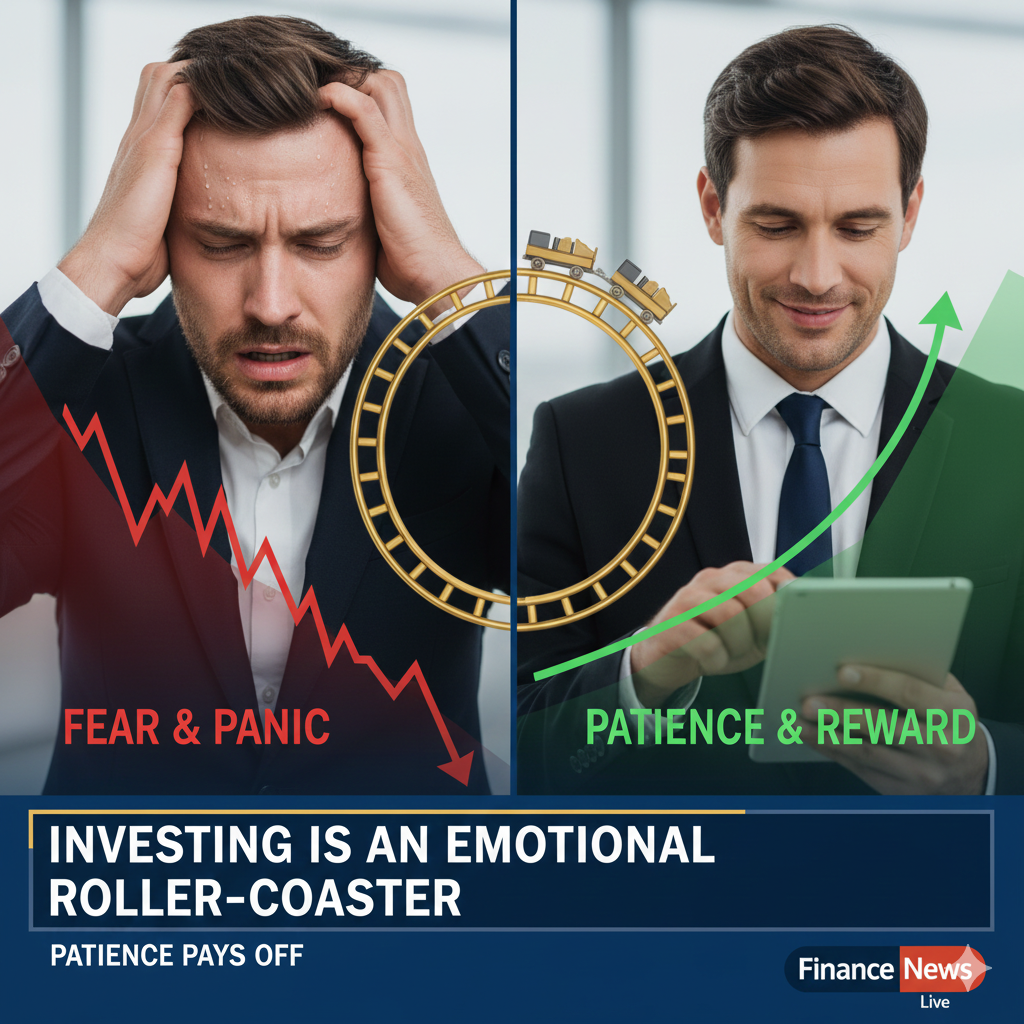

Investing is an Emotional Roller-Coaster — Patience Pays Off
Investing can stir up strong emotions, especially during times of volatility. However, history shows that the greatest gains usually come to those who remain patient and committed for the long term.
Many investors are tempted to time the market — trying to buy at the lowest point and sell at the highest. This urge often comes from negative news, troubling research, or simply a gut feeling that something is about to go wrong.
But timing the market can prove to be a costly mistake.
The stock market is influenced by millions of investors around the world making independent buy-and-sell decisions based on their own perspectives and information. These collective actions determine where the market moves each day.
To illustrate the power of staying invested:
If an investor had placed $1,000 into the U.S. Russell 3000 Index in 1999, that investment would have grown to approximately $6,449 by 2023 — over a 25-year period, or roughly 1,300 weeks.
However, missing just one of the market’s best-performing weeks during that time would have reduced the total value to around $5,382 — a loss of more than $1,000 simply for being out of the market too long.
Leaving the market, especially as a long-term investor, carries significant risk.
Over the past century, the U.S. stock market — as measured by the S&P 500 — has delivered positive returns in about three out of every four years. Even when markets decline, they have historically rebounded relatively quickly, giving investors the opportunity to recover temporary losses.
That said, this trend applies to the overall market, not to individual stocks. Some companies decline and never recover — in extreme cases, their value can drop to zero. This is why diversification and research are essential.
There are situations where selling makes sense: for example, if your personal circumstances change, or your financial goals shift. Outside of such cases, history suggests that staying invested is usually the wiser decision.
In the end, successful investing is less about perfect timing and more about time in the market.