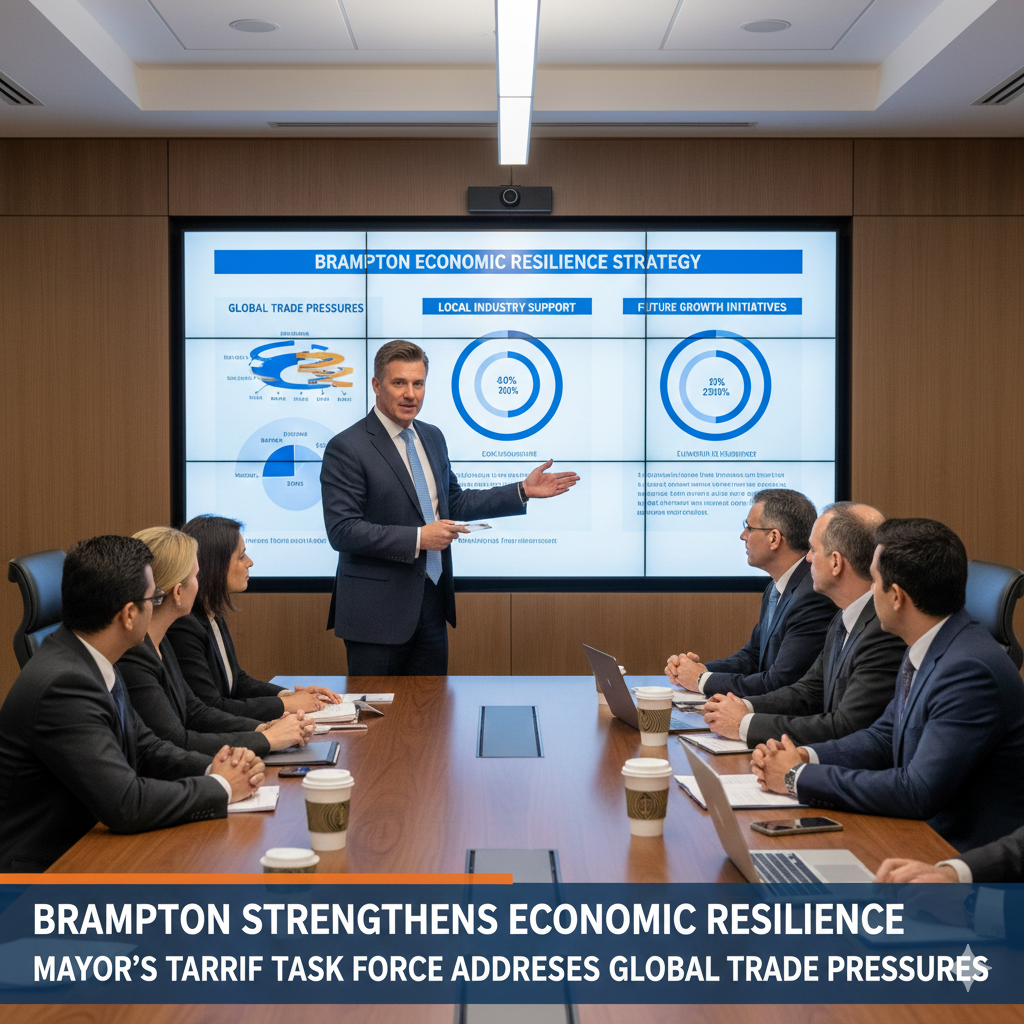
Mayor’s Tariff Task Force Deepens Efforts to Strengthen Brampton’s Economic Resilience Amid Global Trade Pressures

As global trade conditions continue to shift and uncertainty around tariffs persists, the City of Brampton is reinforcing its commitment to protecting and strengthening the local economy. Building on earlier momentum, the Mayor’s Tariff Task Force convened for its second high-level roundtable meeting in late December, bringing together leaders from government, industry, and economic development to chart a path forward for businesses navigating an increasingly complex international trade environment.

Hosted by Invest Brampton, the city’s Economic Development Office, the meeting underscored Brampton’s proactive approach to safeguarding jobs, supporting exporters, and ensuring the city remains competitive on the global stage.

Building on the Foundation Laid Earlier This Year

The second roundtable follows the formal launch of the Mayor’s Tariff Task Force in April, an initiative designed to address the real and potential impacts of tariffs and trade disruptions on Brampton’s diverse economy. From the outset, the task force has focused on collaboration, data-driven policy discussions, and practical solutions for businesses facing rising costs, supply chain disruptions, and shifting market access.

City officials emphasized that the December meeting was not a standalone event, but part of an ongoing strategy to strengthen economic resilience.

By reconvening stakeholders before the end of the year, Brampton aimed to assess progress made since the inaugural meeting, identify emerging risks, and refine support mechanisms for companies operating across borders.

A Cross-Sector Roundtable Reflecting Brampton’s Economic Diversity

Representation From Key Economic Pillars

The roundtable brought together representatives from industries that form the backbone of Brampton’s economy. These sectors play a critical role in employment, innovation, and exports, making them particularly sensitive to changes in global trade policy.

Key sectors represented included:

  • Advanced manufacturing

  • Innovation and technology

  • Food and beverage processing

  • Logistics and supply chain management

This cross-sector participation allowed for a comprehensive discussion of how tariffs and trade barriers affect different parts of the local economy, from raw material sourcing to finished goods distribution.

Industry Leaders Share Frontline Perspectives

Participants included senior leaders and representatives from a wide range of prominent organizations, reflecting both multinational and homegrown enterprises. Among those contributing to the discussion were representatives from MDA Space, Canon Canada, ALMAG Aluminum, Daybar Industries Limited, Peel Plastic Products Ltd., Sofina Foods Canada, Zochem LLC, Adamas International, and Prologis.

Labour and workforce perspectives were also present, with Unifor participating in the discussion, alongside business advocacy and support organizations such as the Brampton Board of Trade and BHive.

Financial and trade support institutions, including TD Commercial Banking, Export Development Canada, and the Trade Commissioner Service, added further depth by highlighting available tools to help businesses manage risk, access new markets, and finance growth.

Together, these voices provided a real-world snapshot of how global trade shifts are being felt on the ground in Brampton.

Federal and Municipal Leadership Align on Trade Strategy

Mayor Patrick Brown Emphasizes Proactive Action

Mayor Patrick Brown played a central role in the meeting, reiterating the city’s determination to stay ahead of global economic challenges rather than reacting after damage has been done.

He emphasized that tariffs and trade disputes are not abstract policy issues but have direct consequences for local employers, workers, and families. By convening the task force, the city aims to ensure Brampton businesses have access to timely information, advocacy, and coordinated support.

The Mayor highlighted that collaboration across levels of government is essential to achieving meaningful results, particularly when dealing with international trade dynamics beyond municipal control.

Federal Presence Reinforces National Commitment

The roundtable was joined by the Honourable Maninder Sidhu, P.C., M.P., Canada’s Minister of International Trade, underscoring the importance of federal-municipal cooperation. His participation provided businesses with direct access to federal insights on trade policy, international negotiations, and export support programs.

Minister Sidhu discussed the federal government’s role in promoting Canadian competitiveness abroad, diversifying trade relationships, and supporting companies facing tariff-related pressures. His presence also allowed local industry leaders to raise concerns and questions directly with a senior decision-maker.

Regional and City Leaders at the Table

Regional Councillor Gurpartap Singh Toor, serving as Chair of Economic Development, and Regional Councillor Rowena Santos, Vice-Chair, also took part in the discussions. Senior members of Brampton’s Economic Development team contributed data, analysis, and updates on city-led initiatives aimed at supporting investment, innovation, and workforce development.

This mix of political leadership and technical expertise helped ensure discussions were both strategic and grounded in operational realities.

Addressing the Real-World Impacts of Tariffs

Supply Chains, Costs, and Competitiveness

One of the central themes of the roundtable was the impact of tariffs on supply chains. Manufacturers and processors shared how increased input costs, delays, and uncertainty can ripple through operations, affecting pricing, contracts, and long-term planning.

Logistics companies highlighted challenges related to border efficiency, transportation costs, and compliance requirements, all of which influence Brampton’s role as a major distribution hub.

Participants stressed that even when tariffs do not apply directly to finished products, indirect effects—such as higher material costs or disrupted supplier relationships—can significantly affect competitiveness.

Supporting Small and Medium-Sized Enterprises

While large multinational firms may have more resources to adapt to trade disruptions, small and medium-sized enterprises often face greater vulnerability. Task force discussions emphasized the need for targeted support for these businesses, including access to market intelligence, financing tools, and export readiness programs.

Representatives from Export Development Canada and the Trade Commissioner Service outlined available supports designed to help companies mitigate risk, identify alternative markets, and navigate regulatory requirements abroad.

Strengthening Brampton’s Economic Resilience

Innovation and Diversification as Long-Term Solutions

Beyond immediate tariff concerns, the roundtable focused on long-term resilience strategies. Diversifying export markets, investing in innovation, and strengthening local supply chains were identified as key priorities.

Technology and innovation leaders highlighted the importance of research and development, automation, and digital transformation in helping companies remain competitive regardless of trade fluctuations.

City officials noted that Brampton’s growing innovation ecosystem, combined with its strategic location and skilled workforce, positions it well to adapt—provided businesses have the right supports in place.

Collaboration as a Competitive Advantage

A recurring message throughout the meeting was that collaboration itself is a critical economic asset. By bringing together government, industry, labour, and financial institutions, the Mayor’s Tariff Task Force creates a platform for shared problem-solving and coordinated advocacy.

Participants agreed that open dialogue helps identify issues earlier and ensures policy responses are informed by real business experiences rather than assumptions.

Next Steps and Ongoing Engagement

From Discussion to Action

City officials confirmed that insights gathered during the second roundtable will inform ongoing work by Invest Brampton and the Mayor’s Tariff Task Force. This includes refining advocacy priorities, enhancing business support programs, and strengthening communication with provincial and federal partners.

Follow-up engagement with participating organizations is expected, ensuring that momentum from the meeting translates into tangible outcomes.

Commitment to Continued Dialogue

The City of Brampton signaled that the task force will continue to meet as trade conditions evolve. Regular engagement allows the city to remain responsive to new challenges while tracking progress on previously identified issues.

By maintaining this ongoing forum, Brampton aims to ensure its economic strategy remains agile and inclusive.

Conclusion: Positioning Brampton for a Changing Global Economy

The second meeting of the Mayor’s Tariff Task Force marked another important step in Brampton’s efforts to protect and strengthen its economy amid global trade uncertainty. By convening leaders from across sectors and levels of government, the city reaffirmed its commitment to collaboration, resilience, and proactive economic leadership.

Federal Government Weighs Support for Brampton Extortion Crisis, January Summit Planned as Crime Surges

The federal government is giving “serious consideration” to providing targeted support to help Brampton and the broader Peel Region confront a sharp rise in extortion-related crime, Public Safety Minister Gary Anandasangaree has confirmed. The announcement comes amid mounting concern from municipal leaders, law enforcement, and community organizations over the growing scale, sophistication, and cross-border nature of extortion cases affecting local businesses and families.

As part of the federal response, Ottawa plans to convene a high-level summit in Peel Region in January, bringing together governments and law enforcement agencies to develop a coordinated strategy to address the issue.

Rising Extortion Cases Prompt Urgent Calls for Action

Extortion has emerged as one of the most pressing public safety challenges facing Brampton and Mississauga in recent years. According to Peel Regional Police, reported cases involving businesses have risen dramatically over a short period of time, highlighting what officials describe as a troubling and accelerating trend.

During a Dec. 10 meeting of Brampton city council, police reported that there were 50 business-related extortion cases in Brampton and Mississauga in 2023. That number jumped sharply to 153 cases in 2024 and has already reached 172 so far in 2025. Authorities have cautioned that these figures may underrepresent the true scope of the problem, as some victims may be reluctant to come forward due to fear, stigma, or safety concerns.

The surge has placed increasing strain on municipal resources and prompted calls for stronger provincial and federal involvement.

Mayor Patrick Brown Seeks Federal and Provincial Support

In response to the escalating crisis, Brampton Mayor Patrick Brown sent a letter on Dec. 16 to Prime Minister Mark Carney and Public Safety Minister Anandasangaree, urging Ottawa to take decisive action. In the letter, Brown argued that the nature of extortion crimes in Peel has evolved beyond what municipalities can handle on their own.

He described the crimes as increasingly organized, sophisticated, and transnational, often involving networks that operate across provincial and national borders. According to Brown, these characteristics make it difficult for local police services to effectively disrupt criminal activity without enhanced support and coordination from senior levels of government.

Council Motion Calls for Federal Action

Brown’s letter followed the unanimous passage of a motion by Brampton city council calling on the federal government to step in with concrete measures. The motion outlined several key requests, including extending dedicated funding for extortion and organized crime task forces to Peel Region.

Council specifically pointed to the federal funding and operational model used in British Columbia, where multi-agency task forces have been established to tackle similar forms of organized crime. Brampton officials argue that a comparable approach in Peel would strengthen enforcement efforts and improve intelligence sharing.

Victim Support and Community Outreach Highlighted

In addition to enhanced law enforcement funding, the council motion and mayor’s correspondence emphasized the need for greater support for victims of extortion. Victims often face not only financial losses, but also emotional distress, fear for personal safety, and long-term impacts on their livelihoods.

Funding for Victim Services

The city has asked Ottawa to provide funding for victim support programs and community outreach initiatives. Such funding, officials say, would help ensure victims receive timely assistance, feel safe reporting crimes, and have access to culturally responsive services tailored to the diverse communities affected.

Mayor Brown has argued that supporting victims is essential to building trust between communities and law enforcement, and to encouraging more people to come forward with information that could help dismantle criminal networks.

Federal Government Signals Willingness to Engage

In a written statement issued this week, Public Safety Minister Gary Anandasangaree said the federal government appreciates the concerns raised by Brampton officials and shares their alarm over the rise in extortion cases in Peel Region.

“We will give serious consideration to the proposals Brampton Council is advancing,” Anandasangaree said. He noted that experience in British Columbia has shown that coordinated action across all levels of government is the most effective way to combat extortion and organized crime.

January Summit Planned in Peel Region

As part of the federal response, Anandasangaree confirmed that Ottawa will convene a summit in Peel Region in January. The meeting is intended to bring together representatives from federal, provincial, and municipal governments, along with law enforcement agencies, to address extortion “head-on.”

The minister said more details about the summit would be released in the coming weeks, but emphasized that collaboration and resource-sharing will be central themes.

Province Also Urged to Take Immediate Action

Mayor Brown has also appealed to the Ontario government for urgent assistance. In a separate letter sent to Premier Doug Ford and Solicitor General Michael Kerzner, Brown called on the province to partner with the federal government to establish a dedicated victim support fund.

Proposal for a Provincial Victim Support Fund

The proposed fund would mirror a model already in place in British Columbia, providing coordinated and culturally responsive support to extortion victims. According to Brown, such a fund would not only help individuals and businesses recover, but also reinforce public confidence and encourage reporting of crimes.

The letter argued that provincial involvement in victim support would complement law enforcement efforts and help reduce the long-term social and economic costs associated with organized crime.

Ford Says Province Deploying All Available Resources

When asked during an unrelated news conference on Dec. 17 whether Ontario would commit to working with the federal government on a victim support fund, Premier Doug Ford emphasized the province’s ongoing efforts to combat extortion.

“We’re throwing every single resource we can to combat this,” Ford said. He urged victims to contact police immediately and expressed confidence in law enforcement agencies at all levels.

Confidence in Law Enforcement Task Forces

Ford said he has “all the faith in the world” in the RCMP, Ontario Provincial Police, and regional police services, noting that dedicated task forces are already working to identify and apprehend those responsible for extortion attempts.

Provincial officials have previously stated that organized crime investigations often require long-term efforts, particularly when dealing with networks that operate across jurisdictions.

Community Concerns and Grassroots Response

The rise in extortion has also prompted significant concern within the community, particularly among Sikh families and business owners who have reported being disproportionately targeted.

On Dec. 7, Sikh organizations hosted a town hall meeting in Brampton that brought together police, politicians, and community members. Organizers described the situation as an unprecedented wave of extortion affecting not only Brampton, but communities beyond Peel Region.

Importance of Community Engagement

Participants at the town hall emphasized the need for culturally sensitive outreach and clear communication from authorities. Community leaders stressed that fear and mistrust can prevent victims from reporting crimes, underscoring the importance of support services and visible government action.

Conclusion: Coordinated Response Seen as Critical

As extortion cases continue to rise in Brampton and across Peel Region, momentum is building for a coordinated response involving all levels of government. The federal government’s commitment to seriously consider Brampton’s proposals, along with plans for a January summit, signals a potential turning point in addressing the crisis.

Municipal leaders argue that sustained funding, intelligence-sharing, and victim support will be essential to disrupting organized criminal networks and restoring a sense of safety within the community. With provincial and federal discussions now underway, residents and businesses will be watching closely to see whether promised collaboration translates into tangible results in the months ahead.

Realtors Impacted by iPro Realty Scandal to Receive Half of Frozen Commissions

Florez is part of a group representing roughly 250 affected agents, many of whom have been waiting months for commissions tied to completed transactions. She says the group plans to formally raise concerns with both RECO administrator Jean Lépine and Premier Doug Ford, arguing that the current compensation structure unfairly shifts the burden of brokerage failure onto individual realtors.


What RECO Is Saying

In a public advisory issued Dec. 15, Lépine said RECO’s priority has been to accelerate payments through the Commission Protection Insurance Program, administered by Alternative Risk Services.

“This event is larger in scope and size than any that has occurred in 25 years of the insurance program,” the insurer said, noting that total commission losses are projected to reach approximately $30 million.

According to Alternative Risk Services, the combination of:

  • $4 million in insurance coverage, and

  • Funds expected to be recovered from frozen iPro accounts

is only sufficient to cover about half of the total commission claims.

Lépine emphasized that consumer protection was also a key concern, adding that approximately $5 million in consumer deposit claims have already been paid out, ensuring buyers and sellers were not financially harmed by the brokerage’s collapse.


Why Only 50 Per Cent?

At the heart of the dispute is how commission protection insurance is structured in Ontario.

Real estate agents are required to pay into an insurance program designed to protect both consumer deposits and realtor commissions in the event of brokerage insolvency or misappropriation. However, agents do not control trust accounts and have no authority over how brokerages manage funds.

“That’s the fundamental injustice here,” Florez said. “Realtors are paying for insurance to cover risks they don’t create and can’t control.”

Insurance limits, combined with the scale of losses at iPro, mean that even when the insurance is triggered, agents are effectively competing for a limited pool of funds—often after consumer claims are prioritized.


The iPro Timeline

According to an audit report cited by provincial officials, iPro Realty first disclosed a $10 million shortfall in trust accounts to RECO on May 19. However, the regulator did not publicly disclose the issue until August 14, when it announced the brokerage would terminate its registration and close on Aug. 19.

By that point, RECO moved to freeze all iPro accounts, a step intended to safeguard remaining funds but one that also prevented commissions from being released without a court order.

“Once a freeze order is in place, outstanding funds can be deposited, but no funds can be released without evidence of loss and court authorization,” Lépine explained.

That freeze sparked a wave of protests by agents across the Greater Toronto Area, with demonstrators demanding immediate access to earned commissions.


Provincial Takeover of RECO

The scale of the scandal prompted the Ontario government to take over RECO, appointing Lépine as administrator effective Dec. 1.

An independent audit concluded that RECO’s registrar had deviated from standard regulatory practices in responding to the iPro situation, raising concerns about delayed intervention and oversight failures.

For affected agents, those findings only deepen frustration.

“If regulatory failures contributed to the size of this loss,” Florez argued, “then RECO should be financially responsible for ensuring commissions are paid in full.”


Agents Say System Is Fundamentally Unfair

In a written statement, Florez questioned why individual realtors—many of whom are independent contractors—bear the financial consequences of brokerage misconduct.

“If brokerages are the custodians of trust funds, why are they not bearing the full cost of the insurance that protects against their own failures?” she asked.

Agents say the current system leaves them:

  • Waiting months for payment

  • Receiving partial compensation

  • Absorbing financial losses despite completing transactions

Many report having mortgages, staff salaries, marketing expenses and personal obligations that continued while their income was frozen.


Broader Impact on the Industry

iPro Realty employed approximately 2,400 agents and operated 17 locations across Ontario, including Mississauga, Brampton, Burlington, Milton, Georgetown, Woodbridge, Orangeville and Pickering.

Industry observers say the scandal has shaken confidence in brokerage oversight and raised questions about whether insurance limits and regulatory safeguards are adequate for large, modern brokerages.

“This case exposed vulnerabilities that have existed for years,” said one real estate governance expert. “The system was designed for smaller failures, not multi-million-dollar collapses.”


What Happens Next?

For now, agents will begin receiving half of their owed commissions, with no guarantee the remaining balance will ever be paid.

Florez and other agents say they will continue pushing for:

  • Full commission repayment

  • Regulatory reform

  • A review of insurance funding structures

  • Clear accountability for oversight failures

“This isn’t just about iPro,” Florez said. “It’s about protecting every realtor in Ontario from going through this again.”


Conclusion

The decision to release 50 per cent of frozen commissions marks a significant but controversial step in resolving one of Ontario’s largest real estate scandals.

While regulators emphasize consumer protection and financial limitations, affected agents argue the solution leaves them unfairly penalized for failures beyond their control.

As partial payments roll out, the iPro scandal continues to raise uncomfortable questions about accountability, insurance adequacy and who ultimately pays the price when brokerage oversight breaks down.

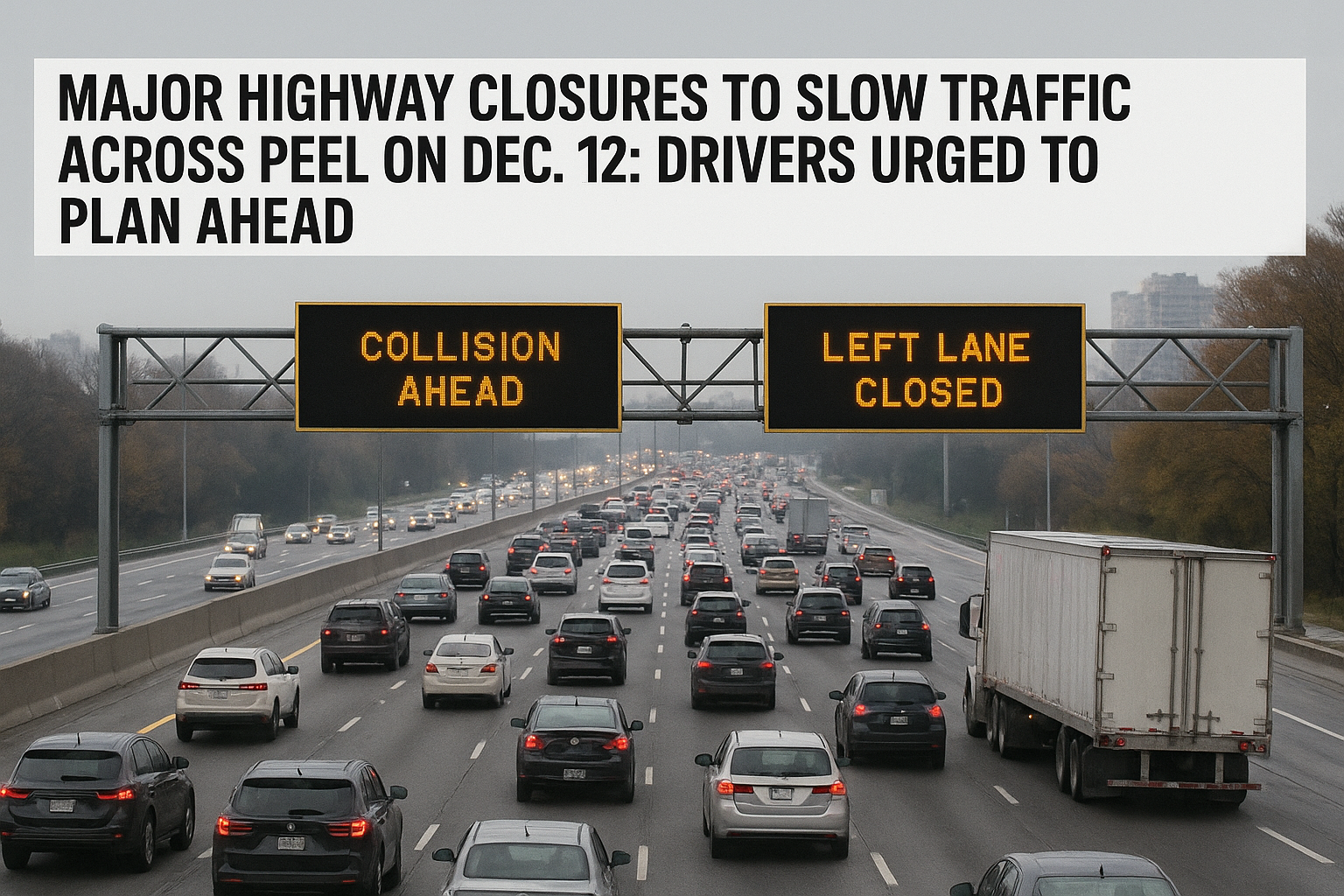
Major Highway Closures to Slow Traffic Across Peel on Dec. 12: Drivers Urged to Plan Ahead

As winter weather, seasonal maintenance and infrastructure upgrades converge across the Greater Toronto Area, Peel Region drivers are being advised to brace for a full slate of highway disruptions on Thursday, Dec. 12, 2025. A total of 16 scheduled closures will affect key routes in Mississauga, Caledon and surrounding communities—potentially impacting commuters, commercial drivers and holiday travellers alike.

The Ministry of Transportation of Ontario (MTO) has confirmed that these closures are part of ongoing repair, rehabilitation and safety-enhancement projects across several of the busiest highways in the region. While most of the restrictions involve alternating lane closures during overnight or off-peak hours, transportation officials warn that motorists should expect delays and plan alternate routes wherever possible.


A Busy Week for Road Maintenance Across Peel

Why These Closures Matter

Peel Region’s highways form some of the most heavily travelled corridors in Ontario, carrying significant volumes of passenger and commercial traffic daily. December is also a period when routine maintenance intersects with weather-related repairs, forcing the province to accelerate work before winter conditions worsen.

The combination of lane reductions, ramp closures and overnight restrictions is designed to minimize daytime disruption. However, with multiple closures overlapping across Highway 401, Highway 403, Highway 10 and the Queen Elizabeth Way (QEW), the cumulative impact is expected to be noticeable throughout the week.


Breakdown of Major Highway Restrictions

Below is a detailed look at the scheduled Dec. 12 closures, including timelines, affected stretches and what drivers should anticipate.

Highway 403 Closures

Highway 403—one of Mississauga’s most critical east–west arteries—will experience repeated lane impacts this week.

Eastbound Between Highway 407 and Mavis Road

  • Three alternating lanes closed

  • Dec. 15 at 9 p.m. – Dec. 20 at 5 a.m.

This extensive eastbound lane reduction could cause delays extending toward the 401/403 interchange, one of the GTA’s well-known congestion points.

Multiple Eastbound Off-Ramp Restrictions Near Highway 401

Three separate closures will affect the eastbound off-ramp south of Highway 401 in Mississauga:

  • Dec. 10 at 10 p.m. – Dec. 13 at 6 a.m.

  • Dec. 11 at 10 p.m. – Dec. 13 at 6 a.m.

  • Dec. 15 at 10 p.m. – Dec. 20 at 6 a.m.

Alternating lane closures on this busy connector ramp may slow overnight traffic and impede access to nearby commercial and industrial districts.

Additional Eastbound Lane Closure

  • Dec. 6 at 9 p.m. – Dec. 14 at 5 a.m.

  • Three alternating lanes closed

With multiple closures overlapping along Highway 403, drivers using the route this week are encouraged to allow extra travel time and watch for sudden slowdowns.


Highway 10 Closures in Caledon

Motorists travelling north–south through Caledon will encounter several closures along Highway 10, which serves as a major rural and commuter corridor.

Southbound Between Forks of the Credit Rd. and Old School Rd.

  • One alternating lane closed

  • Dec. 8 at 9 a.m. – Dec. 15 at 5 a.m.

A second, extended closure follows:

  • Dec. 15 at 9 a.m. – Dec. 22 at 5 a.m.

These daytime and overnight closures may create bottlenecks in an area where alternate routes are limited.

Northbound Between Old School Rd. and Forks of the Credit Rd.

Two separate northbound restrictions will also be active:

  • Dec. 8 at 6 p.m. – Dec. 15 at 3 p.m.

  • Dec. 15 at 6 p.m. – Dec. 22 at 3 p.m.

These alternating lane closures may impact commuters heading toward Orangeville and surrounding rural areas.


Queen Elizabeth Way (QEW) Closures

The QEW—linking Toronto, Mississauga and the Halton region—will see some of the longest-lasting lane restrictions this month.

Toronto-Bound Between Cawthra Rd. (Mississauga) and West Mall/Evans Ave. (Toronto)

  • Two alternating lanes closed

  • Nov. 23 at 10 p.m. – Dec. 14 at 5 a.m.

  • A second closure from Dec. 3 at 9 p.m. – Dec. 14 at 5 a.m.

These overlapping restrictions, approaching one of the GTA’s most heavily travelled QEW stretches, may generate traffic backups especially near downtown Toronto commuters.

Toronto-Bound Between Winston Churchill Blvd. (Oakville) and Highway 10/Hurontario (Mississauga)

  • Two alternating lanes closed

  • Dec. 7 at 10 p.m. – Dec. 13 at 5 a.m.

This section often experiences nighttime construction due to ongoing rehabilitation work on bridges and pavement structures.

Toronto-Bound Between Erin Mills Pkwy./Southdown Rd. and Highway 10/Hurontario

  • Two alternating lanes closed

  • Dec. 17 at 10 p.m. – Dec. 19 at 5 a.m.

These closures are expected to cause delays near Mississauga Road and areas with active interchange construction.

Fort Erie-Bound Between Highway 10/Hurontario and Mississauga Rd.

  • Two alternating lanes closed

  • Dec. 7 at 11 p.m. – Dec. 12 at 6 a.m.

Southbound travellers heading toward Burlington or Niagara should exercise caution during overnight hours.

Fort Erie-Bound Between Erin Mills Pkwy./Southdown Rd. and Erin Mills Pkwy./Southdown Rd.

  • Right lane closed

  • Dec. 9 at 10 p.m. – Dec. 12 at 5 a.m.

This short but frequently travelled segment will experience reduced capacity during late evening and early-morning intervals.


Highway 401 Closure

Highway 401—Canada’s busiest highway—will see one scheduled closure affecting westbound drivers.

Westbound Between Dixie Rd. and Highway 410

  • One alternating lane closed

  • Dec. 15 at 11 p.m. – Dec. 18 at 5 a.m.

While the closure is limited to overnight hours, congestion may still build due to high truck traffic volumes.


How These Closures Are Managed

Coordination Between MTO and Municipal Partners

Transportation officials note that work schedules are carefully selected to balance construction needs with the region’s substantial daily traffic. Overnight windows are typically chosen to minimize disruption, but winter weather and emergency repairs may force last-minute changes.

Potential for Weather-Related Adjustments

As with all winter-season maintenance, the Ministry of Transportation warns that closure timelines may shift due to:

  • Snowfall and ice conditions

  • Emergency repair requirements

  • Equipment delays

  • Safety considerations for on-site crews

Motorists are strongly encouraged to regularly check updates through Ontario 511, local traffic media and navigation apps that provide real-time construction alerts.


Tips for Drivers Navigating the Closures

Plan Ahead to Reduce Delays

With closures spread across multiple major highways, drivers can take several steps to minimize travel disruption:

  • Check live traffic information before leaving home

  • Allow extra time, especially for morning or evening travel

  • Use alternate routes where available

  • Drive cautiously near construction zones and obey reduced speed limits

Even if lane closures appear short, the cumulative effect across Peel’s major corridors may contribute to heavier congestion, particularly for commuters heading into Toronto or across Halton Region.


Understanding the Broader Purpose

This round of scheduled lane closures is part of Ontario’s ongoing strategy to maintain and modernize critical highway infrastructure. With aging bridges, high traffic volumes and expanding communities placing greater pressure on the road network, proactive repairs remain essential to keep routes safe and efficient.

The Ministry notes that while closures are inconvenient in the short term, they are vital to preventing deterioration that could require longer-term shutdowns in the future.


Conclusion: Expect a Slower Commute and Stay Informed

With 16 separate highway closures scheduled across Peel Region on Dec. 12, drivers can expect slower travel and shifting traffic patterns throughout the week. While most restrictions target overnight hours, the ripple effects may still touch both rush periods and commercial routes. Motorists are encouraged to prepare accordingly, make use of real-time traffic tools and stay aware of evolving conditions as winter repairs continue.

If your travel takes you beyond Peel, additional closures are listed through Ontario 511 to help drivers plan longer trips across the province.

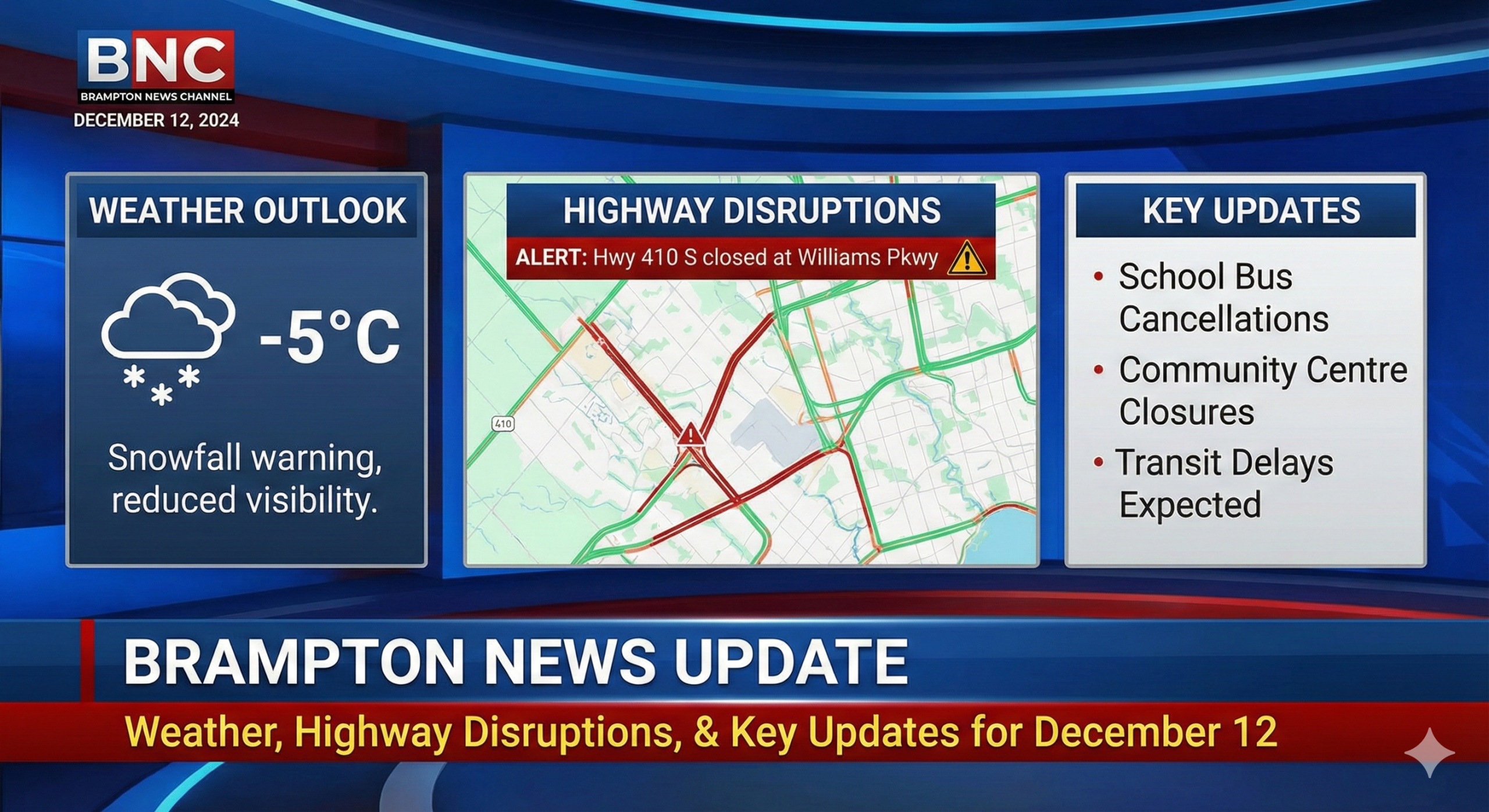
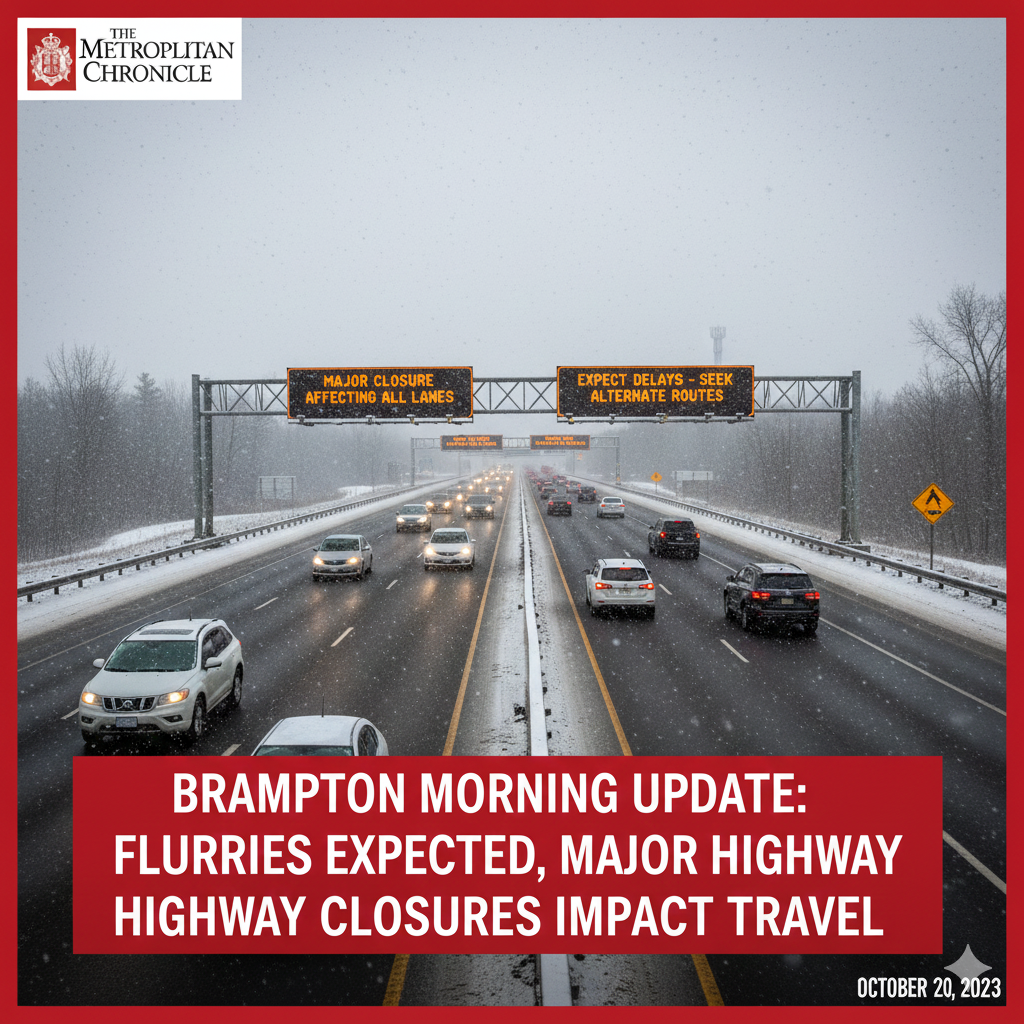
Brampton Weather Outlook, Highway Disruptions, and Key Updates for December 12

As Brampton residents start their Friday morning, a mix of early-winter weather conditions, ongoing highway closures, and developing local news stories are shaping the day ahead. With temperatures hovering around the freezing mark and a blanket of cloud cover settling over the region, commuters and residents are being advised to stay alert to both road conditions and expected evening flurries.

This comprehensive update provides a detailed look at today’s weather forecast, the latest traffic disruptions across major highways, and the essential information residents need to begin their day well-informed.


A Cloudy and Cold Start to the Day

Morning Temperatures Hovering Around Freezing

Environment Canada is forecasting a mainly cloudy sky across Brampton this morning, creating a cold but typically seasonal December atmosphere. Daytime temperatures are expected to reach a high of 0°C, offering little opportunity for melting on surfaces that froze overnight.

The thick cloud cover is expected to persist through the afternoon, creating a dull, grey backdrop across the city as residents head to work, school, and early weekend errands. While no significant precipitation is anticipated during daytime hours, the cold temperatures continue to pose the risk of slick roads, especially in shaded or elevated areas.

Evening Flurries Expected Across the Region

As the day transitions into night, Brampton will see a shift in conditions with light flurries forecasted after sunset. Temperatures are projected to drop to –6°C, creating ideal conditions for snow to accumulate on untreated roads and sidewalks.

Drivers are advised to proceed with caution, particularly during late-evening commutes, as visibility may fluctuate due to intermittent flurries. With temperatures expected to stay below freezing overnight, icy patches may develop and persist into the next morning.


Major Highway Disruptions Impacting Commuters

Closures on Highway 10 and Surrounding Routes

Several major highways in and around Brampton are experiencing closures and traffic disruptions today. Authorities have confirmed that sections of Highway 10 remain closed due to ongoing maintenance operations and weather-related safety concerns. Commuters relying on this corridor should anticipate delays and consider alternative routes where available.

Highway 401: Delays Expected Through Key Sections

One of the region’s busiest roadways, Highway 401, is also facing closures along select stretches. These disruptions are expected to significantly affect travel times during both the morning and afternoon rush hours. With temperatures at or below freezing, crews are monitoring road conditions closely to address icy buildup and ensure driver safety.

Highway 403 and QEW: Ongoing Restrictions

In addition to the 401 and Highway 10, both Highway 403 and the Queen Elizabeth Way (QEW) are experiencing partial closures. These restrictions stem from a combination of scheduled maintenance, collision cleanup, and precautionary weather-related measures.

Motorists should monitor real-time traffic updates and plan trips accordingly, particularly those who travel between Brampton, Mississauga, Oakville, and surrounding areas. Transit riders may also experience delays if buses are rerouted due to closures or reduced traffic flow.


Weather and Traffic Conditions Shape the Day Ahead

Impact on Schools, Workplaces, and Local Travel

With temperatures remaining low and evening flurries in the forecast, today’s conditions may affect school schedules, workplace planning, and local travel routines. Residents are advised to dress in warm, layered clothing and allow extra time for their commute, especially during peak periods.

School transportation services are operating normally but are encouraging families to be prepared for potential delays, particularly on rural routes or those passing through construction zones and affected highways.

Tips for Staying Safe During Winter Travel

Given the combination of cold temperatures, cloud cover, and the likelihood of nighttime flurries, safety experts are reminding residents to:

  • Check weather and traffic apps before leaving home.

  • Give yourself additional time for travel.

  • Keep vehicle fuel tanks at least half full during winter.

  • Ensure winter tires are properly inflated and in good condition.

  • Use headlights during cloudy or low-visibility conditions.

  • Maintain a safe following distance on potentially icy roads.

These simple precautions can significantly reduce the risk of collisions and improve road safety for both drivers and pedestrians.


Community Updates and Headlines to Watch Today

Local News Highlights

While weather and traffic dominate the morning headlines, Brampton residents can also expect updates on several developing local stories throughout the day. City officials are expected to release new information related to ongoing municipal projects, community programs, and public safety initiatives. More updates will be published as details become available.

Role of Public Data in Daily Briefings

Today’s daily briefing is compiled using open-source data, weather forecasts from Environment Canada, and real-time updates from provincial transportation authorities. This seamless integration of data helps provide residents with reliable, timely information to support safer travel and better planning throughout the day.


Looking Ahead: Weekend Weather Expectations

As Brampton moves closer to the weekend, residents should prepare for continued cold temperatures and the possibility of additional precipitation. Meteorologists are watching a weak system that may bring light snow or mixed precipitation early next week, though conditions remain subject to change.

The next 48 hours will see below-seasonal temperatures, making winter jackets, scarves, and gloves essential for anyone spending extended time outdoors.


Conclusion: Staying Prepared During Early Winter Conditions

This Friday brings a combination of cloudy skies, near-freezing temperatures, and significant highway closures that will influence the day’s flow across Brampton. With flurries expected tonight and a nighttime low of –6°C, residents should take steps to stay warm, remain aware of changing road conditions, and plan ahead for potential travel delays.

Whether heading out for work, school, or weekend preparations, staying informed remains the most effective way to navigate early winter weather safely. Continue to monitor updates from Environment Canada, provincial highway authorities, and local news sources for the latest information throughout the day.

Project Wrangler: Thirteen Arrested as Police Break Up Alleged Violent Criminal Network Spanning Ontario and Quebec

A Coordinated Crackdown That Reshaped a Complex Investigation

What began as a routine analysis of several unrelated violent incidents quickly evolved into a sprawling, multi-jurisdictional investigation—one that ultimately brought together police agencies from across Ontario and Quebec. The resulting operation, known as Project Wrangler, has now led to the arrest of thirteen individuals, more than 150 criminal charges, and the identification of what investigators describe as an organized and exceptionally dangerous criminal group.

Police say the network’s activities were not only widespread but deeply alarming, involving offenses ranging from robbery and carjacking to attempted murder and first-degree murder. The scope of these allegations reveals a troubling pattern of escalating violence. And as one officer dryly noted during a briefing, “Criminal organizations don’t file customer service complaints—they escalate.” It was a grim joke, perhaps, but an apt observation about the stakes.

Against that backdrop, a Brampton resident is now charged with first-degree murder, two others from Peel Region face attempted murder charges, and authorities are still searching for two suspects who remain at large. The dismantling of this group, police say, marks a critical step in preventing further harm.

Unraveling the Network

Tracing Violence Across Two Provinces

Project Wrangler did not arise overnight. The investigation began after a string of violent incidents, reported between April 15, 2024, and March 20, 2025, raised red flags for police in southern and eastern Ontario as well as parts of Quebec. While early reports appeared isolated, investigators soon noticed similarities in execution, motive, and offender profiles.

As information accumulated, teams from multiple police services started sharing intelligence. A pattern emerged—one that pointed to a coordinated set of individuals moving through several cities while allegedly committing targeted attacks.

According to York Regional Police, these incidents included attempted murders, an attempted kidnapping, and numerous armed confrontations involving home invasions, carjackings, and robberies. Each event, taken alone, created serious concern. Together, they depicted a network operating with deliberate organization and escalating boldness.

Inside the Fictional Experience of an Investigator

For one detective—let’s call him Detective Harris—the moment when the puzzle pieces clicked into place happened during a quiet evening review of case files. “It was one of those moments,” he reportedly told a colleague, “where you stare at the board and realize the lines practically draw themselves.”

His fictional reflection mirrors a common reality in major investigations: the tipping point often arrives not with a dramatic break but with the calm recognition that scattered clues now form a cohesive thread. In Harris’s case, the thread led straight to individuals who were rapidly becoming a danger to multiple communities.

He joked later, quoting Tina Fey, that “being a detective sometimes feels like trying to put socks on a rooster.” But in this instance, the rooster finally stood still long enough.

A Calculated Enforcement Strategy

Bringing Multiple Police Forces Together

Once investigators confirmed the presence of an organized network, the operation expanded. York Regional Police took a leading role but worked alongside agencies in Peel Region, Hamilton, Toronto, Ottawa, and several jurisdictions in Quebec. The collaboration mirrored the suspects’ geographic footprint—fluid, mobile, and difficult to contain without a unified strategy.

Joint investigations often bring logistical complexity, but officers say the stakes demanded it. Violent criminal groups tend to exploit gaps between police jurisdictions, slipping from one region to the next with relative ease. Project Wrangler aimed to close those gaps. Officers relied heavily on intelligence sharing, coordinated surveillance, and synchronized enforcement actions.

Over time, what began as an inquiry into violent incidents evolved into a high-priority mission to disrupt an entire structure.

The Arrest Phase

As evidence solidified, police moved in. Thirteen suspects were taken into custody and charged with more than 150 offenses collectively. Charges range widely but include first-degree murder, attempted murder, kidnapping-related offenses, weapons charges, and robbery.

Among those arrested is a man from Brampton now charged with first-degree murder. Two additional suspects from Peel Region face attempted murder charges tied to separate incidents under the Project Wrangler umbrella. Their alleged roles, while still unfolding in court documents, reflect what investigators describe as a coordinated, hierarchical criminal operation.

Despite the sizable number of arrests, police say two suspects remain at large. One of them is a Hamilton man already wanted for first-degree murder. Officers continue to search for both individuals and are urging anyone with information to step forward.

Understanding the Allegations

A Group Characterized by Violence

Based on police statements, investigators believe the individuals arrested were working collectively as a criminal organization—one involved in violent confrontations with victims and rival parties alike. While the exact motive behind the group’s structure remains subject to courtroom scrutiny, police say the offenders operated with a notable level of intent and planning.

Violence, in many of the incidents, appears to have been used not just as a means to an end but as a tool of intimidation. Home invasions were reportedly aggressive, carjackings included armed threats, and attempted murders signaled a willingness to eliminate obstacles.

This pattern helps explain why several police services mobilized quickly to support York Region’s lead role. Criminal organizations employing this level of aggression represent a risk that extends far beyond individual municipalities.

A Broader Impact on Public Safety

Criminal groups of this nature often leave communities shaken long before arrests are made. Residents across several cities had been on edge, worried about the seemingly random nature of the incidents. Even those who did not experience violence directly felt the fear ripple through neighborhoods.

The ultimate arrest of thirteen suspects has brought some measure of relief. Yet police have emphasized that vigilance remains important, especially while two suspects are still wanted.

Community Reaction

Relief Mixed With Caution

Public reaction has been a blend of gratitude and wariness. Residents expressed appreciation for the coordinated policing effort, though many acknowledged lingering anxiety.

One local community member—fictionally, a shop owner named Rafi—recalled installing additional security cameras back in March. “When the news started coming out about all the incidents, I thought to myself: better safe than sorry,” he said. After the arrests were announced, he added, “It’s good news. But until they’re all caught, I’ll keep the cameras rolling.”

His cautious tone reflects a wider sentiment. Communities are reassured by the progress but recognize that investigations of this scale rarely conclude neatly.

What Comes Next

Legal Proceedings and Ongoing Searches

The accused individuals now face the court system, where the charges will advance through preliminary hearings and trial processes. Police have continued their search for the two outstanding suspects and are appealing for public assistance.

Investigators have made clear that Project Wrangler is ongoing in several respects. Additional evidence may still emerge. Further suspects could be identified. And the full scope of the criminal organization’s operations will likely gain clarity as proceedings continue.

A Reminder of the Importance of Cooperation

If Project Wrangler illustrated anything, it is the power of collaboration—both among police services and within local communities. Investigators repeatedly emphasized that public tips played a meaningful role in shaping the case. And the partnership between agencies across two provinces enabled a faster, more decisive disruption of the group.

As one officer summarized: “Crime travels. So must justice.”

Conclusion: A Significant Blow Against Organized Violence

The arrests under Project Wrangler represent a major step toward addressing a complex and dangerous criminal network that operated across significant sections of Ontario and Quebec. With charges ranging from murder to robbery to kidnapping attempts, the case underscores the seriousness of the threat posed by organized violent offenders.

Although two suspects remain at large, the operation has already curtailed the group’s capacity to inflict further harm. Communities, while still alert, can take some comfort in knowing that a concerted, coordinated effort is dismantling the network piece by piece.

The road ahead includes lengthy court processes and continued investigative work. Yet for residents and police alike, the progress achieved so far marks a meaningful stride toward restoring safety and security in the regions touched by these crimes.

Inside the Raptors’ Midseason Shift: How Brandon Ingram Sparked a Turnaround — And What Doug Smith Says About the Team’s Biggest Questions

As the Toronto Raptors hit the crucial 20-game mark of the NBA season, the conversation around the team has quickly shifted from worry to optimism. Two weeks ago, the Raptors were struggling to find rhythm and identity. Now, with several impressive wins and a renewed sense of cohesion, fans are beginning to wonder whether this team has finally discovered its formula for long-term success.

Veteran columnist Doug Smith’s latest mailbag offers a deep dive into many of the questions swirling around Raptors Nation — from Brandon Ingram’s impact and rotation concerns to the much-discussed water bottle incident and the state of scouting across the league. Beyond the basketball concerns, readers also raised broader issues, including the influence of sports gambling and the surprising culture that fueled the Toronto Blue Jays’ memorable season.

This feature unpacks those themes — and highlights Smith’s candid insights — as Toronto enters one of the most important stretches of the year.


The Changing Landscape of Sports Fandom

How Sports Gambling Has Altered the Fan Experience

A recurring theme among fans is how sports gambling has reshaped the emotional connection between supporters and their local teams. One reader expressed discomfort with the increasingly prominent role of sports betting, its integration into broadcasts, and its potential impact on the integrity of the game.

Smith acknowledges the concern. While he agrees that certain alarmist narratives overstate the long-term damage, he also emphasizes that the risks surrounding gambling scandals are real — and growing. Prop bets, in particular, remain a major vulnerability. According to Smith, as long as individual-player wagers are widely accessible, scandals will continue to pop up and erode trust in the system.

Despite this, he cautions against blowing minor incidents out of proportion, arguing that excessive outrage over small matters can distract from the truly dangerous issues.


How the Blue Jays Built One of the Most Cohesive Teams in Franchise History

A Culture Unlike Anything Seen Before

Beyond basketball, readers also asked Smith about the Toronto Blue Jays’ unlikely surge this past season — a year defined by remarkable chemistry and internal leadership.

From Smith’s vantage point, this Blue Jays squad may have been one of the most connected groups he has ever observed in professional sports. Much of that unity, he says, stems from manager John Schneider’s calm, steady livelihood. Schneider allowed players to be themselves, avoided overreactions during highs and lows, and created a space where veterans and younger players could bond naturally over the course of a long season.

He also credits established leaders like Max Scherzer, Kevin Gausman, Chris Bassitt, Vladimir Guerrero Jr., George Springer and Andrés Giménez, all of whom sacrificed ego to elevate the group. That humility trickled down to the entire roster. In Smith’s view, the combination of maturity, leadership and a grounded clubhouse environment created a cultural dynamic that will be difficult — perhaps impossible — to replicate.


Raptors at 20 Games: What’s Driving the Turnaround?

Is Brandon Ingram the Missing Piece?

The biggest question in Raptors land right now: What exactly has changed?

According to Smith, one factor stands above the rest — the arrival of Brandon Ingram.

While the team saw improvements across the board, including Jakob Poeltl’s return to reliable form, Ingram’s playmaking and scoring versatility have fundamentally reshaped Toronto’s offensive flow. His presence has given Scottie Barnes, RJ Barrett and Immanuel Quickley more room to operate, unlocking different angles and combinations that were simply unavailable earlier in the season.

Smith suggests that Ingram is not just an addition — he is the central driver of the Raptors’ newfound success.

The Sky Was Falling… Until It Wasn’t

Two weeks ago, Toronto’s season seemed imperiled. Today, fans are cautiously optimistic. Smith stresses the importance of evaluating teams after the 20-game threshold, a milestone historically seen as a reliable sample size for identifying trends. With the Raptors approaching that benchmark, the signs are encouraging.


Water Bottle Controversy: A Non-Story?

One fan raised questions about the so-called “water bottle incident,” where a player’s frustrated toss splashed a nearby official.

Smith’s take? It was nothing more than an accidental, heat-of-the-moment lapse.

He insists the reaction to the incident has been wildly exaggerated. An immediate apology was made, no harm was intended and everyone involved moved on. Smith likens it to a baseball manager flipping the post-game buffet table — not ideal, but certainly not scandalous.


How Far Can the Celtics Go?

Is a Midseason Trade the Answer?

While the Raptors continue trending upward, the Boston Celtics are hovering around the .500 mark, raising questions about their postseason outlook. Some fans speculate that a trade deadline move might position them for a deeper playoff push.

Smith, however, is not convinced.

From what he hears, Boston is content with taking what he calls a “financial gap year.” Translation: Do not expect splashy moves, even if the team remains inconsistent through February. Their priorities, for now, appear focused on long-term flexibility rather than immediate contention.


The Raptors’ Rotation Challenge

Who Should Solidify the Bench?

Another major question revolves around Toronto’s bench picture. With Jamal Shead, Sandro Mamukelashvili and Collin Murray-Boyles emerging as the primary reserves, the battle for remaining minutes has intensified.

Players like Gradey Dick, Ochai Agbaji and Ja’Kobe Walter are all vying for consistent roles, though none have fully cemented their place.

Smith believes Dick has now established himself as the most reliable option of the group. If he were to choose one player to expand the bench rotation further, he leans toward Jamison Battle — a pure shooter whose scoring ability could bolster Toronto’s second unit.

The Dream Addition?

As a bonus exercise, Smith entertained one question about a hypothetical player addition.

While some fans dream about inserting Anthony Davis into the Raptors lineup, Smith disagrees. For him, the perfect fit — even as an off-the-bench luxury — would be Lauri Markkanen, whose shooting and size could seamlessly complement Toronto’s core.


Assessing Luka Doncic’s Defensive Effort

A reader wondered whether Luka Doncic’s slimmer frame had improved his defensive impact with the Lakers.

Smith says he hasn’t noticed any significant defensive leap. The Lakers, sitting around 21st in defensive rating, remain shaky on that end. With LeBron James expected to return and stabilize the back line, minor improvements may come — but Smith does not foresee a dramatic transformation.


Behind the Scenes: How Strong Is Toronto’s Scouting Department?

Has the Raptors’ Draft Strategy Lost Its Magic?

Toronto has long been praised for uncovering hidden gems — from Pascal Siakam to OG Anunoby. But some fans believe the last few drafts have yielded more misses than hits.

Smith pushes back.

According to him, the Raptors’ scouting department remains largely unchanged in size and structure, operating under assistant GM Dan Tolzman. He argues that recent criticism overlooks Toronto’s strong undrafted finds like Jamal Shead and Jamison Battle, and that it is far too early to judge the 2024 class.

The reality, he says, is simple: the NBA draft is fundamentally unpredictable. Every team misses more often than it hits. Toronto, in his assessment, continues to sit comfortably in the league’s upper-middle tier when it comes to identifying talent.


Conclusion: A Team Finding Its Identity

As the Raptors approach the 20-game mark, their season feels dramatically different than it did just weeks ago. Brandon Ingram’s influence has unlocked new possibilities, the bench is beginning to take shape, and the team appears to be gaining confidence at the right time.

While questions remain about rotation structure, defensive consistency and long-term development, the early signs point to a team moving in the right direction — and a fan base rediscovering its sense of optimism.

Britain Seeks a Reset with Beijing as Treasury Chief Heads to China for High-Level Economic Talks

Britain’s Chancellor of the Exchequer is preparing to embark on a pivotal diplomatic mission to China this weekend, marking the most significant effort in years to restore structured economic engagement between London and Beijing. The visit signals the Labour government’s intention to rebuild a relationship that has been strained by geopolitical tensions, security concerns, and the long disruption caused by the pandemic.

Chancellor Rachel Reeves will spend several days in Beijing and Shanghai, where she is expected to meet with senior Chinese officials — including Vice Premier He Lifeng — to discuss trade, investment, and broader financial cooperation. The Treasury confirmed that reviving the long-stalled China–U.K. Economic and Financial Dialogue (EFD) will be central to the agenda, reflecting a renewed push for stability and pragmatism in the bilateral relationship.


A Strategic Visit Aimed at Rebuilding Trust

Reeves’ trip comes at a critical moment for the U.K., which is grappling with sluggish economic growth and seeking new avenues for international trade partnerships. Britain has designated China as its fourth-largest single trading partner, but diplomatic friction and global uncertainty have weighed heavily on bilateral cooperation in recent years.

Restoring a Key Platform for Economic Engagement

At the heart of Reeves’ mission is the relaunch of the EFD, a once-annual dialogue that served as a key mechanism for resolving market-access issues, fostering regulatory cooperation, and supporting commercial ties across multiple industries. The forum has been dormant since 2019 due to the COVID-19 pandemic and a steep decline in relations following a series of political disputes.

British officials hope restarting the dialogue will help lower trade barriers that U.K. companies face in China, particularly in financial services, automotive manufacturing, consumer goods, and advanced technologies. The government views the EFD as a crucial tool for strengthening commercial relations while maintaining safeguards around national security.

Balancing Engagement with Firm Political Messages

While economic issues will dominate the visit, Reeves is also expected to address several sensitive geopolitical topics. According to the Treasury, she will urge Beijing to cease material or financial support for Russia’s war effort in Ukraine. Additionally, she will raise long-standing concerns about civil liberties and freedoms in Hong Kong — an issue that remains a point of contention between the two governments.

This dual approach reflects the Labour government’s emerging China strategy: increasing cooperation where possible, but remaining vocal about disagreements on security and human rights.


High-Level Delegation Reflects the Visit’s Importance

Reeves will be joined by a substantial delegation representing Britain’s financial institutions and regulatory bodies, underscoring the trip’s economic focus. Bank of England Governor Andrew Bailey, the chief executives of the Financial Conduct Authority and the London Stock Exchange Group, and senior leaders from major banks including HSBC and Standard Chartered will accompany her.

Showcasing British Business in China

During her stay in Beijing, the chancellor is expected to visit several prominent U.K. companies operating in the Chinese market. These include Jaguar Land Rover, which has an extensive manufacturing and distribution presence in the country; Diageo, known for its strong whisky exports; and Brompton, the iconic folding bicycle manufacturer.

These visits are intended to highlight the contribution of British firms to the Chinese market and to demonstrate the government’s support for businesses seeking to expand their footprint in Asia.


A Broader Diplomatic Effort Under the Starmer Government

Reeves’ trip follows a series of recent high-level engagements aimed at recalibrating the U.K.’s approach to China. Foreign Secretary David Lammy visited Beijing in October, while Prime Minister Keir Starmer met President Xi Jinping on the sidelines of the G20 summit in Brazil in November.

A “Pragmatic” Approach to a Complex Relationship

Starmer, who entered office in July, has outlined a policy framework built on what officials refer to as the “three Cs”: challenge, compete, and cooperate. This means confronting Beijing on issues such as security risks and human rights abuses, competing in areas like advanced technology and global supply chains, and cooperating on shared priorities including climate change, health security, and the transition to clean energy.

The Labour government argues that complete disengagement from China is neither realistic nor beneficial for the U.K.’s long-term interests. Instead, ministers have promoted a nuanced strategy that balances economic opportunity with national security vigilance.

Criticism from the Opposition

Not all political voices in Westminster support the government’s approach. Several figures within the Conservative Party have criticized Starmer for what they view as an overly conciliatory stance. They argue that strengthening economic ties should not overshadow concerns about espionage, cybersecurity threats, and the erosion of democratic freedoms in Hong Kong.

These concerns intensified recently after reports emerged that an alleged Chinese agent had developed close connections with prominent British figures, including Prince Andrew, while carrying out covert political activities on behalf of China’s Communist Party. Intelligence officials have cited the case as evidence of Beijing’s increasingly sophisticated influence operations.

Despite the criticism, Lammy has emphasized that many sectors of U.K.–China trade pose no security risk and that pursuing economic cooperation does not preclude taking firm positions on sensitive issues. Reeves is expected to echo these messages during her visit.


Economic Stakes for the United Kingdom

The U.K.’s renewed focus on China comes as Britain faces persistent economic challenges, including low productivity growth, weak business investment, and uncertainty in global markets. China remains a vital destination for British exports and a significant source of inward investment, although relations have cooled in the past five years.

Opportunities for British Industry

For British manufacturers, financial firms, and consumer brands, China’s vast market offers potential for growth — particularly in sectors where U.K. companies have strong international reputations. Automobiles, spirits, pharmaceuticals, renewable energy technology, and financial services are among the industries with the most to gain from improved market access and regulatory cooperation.

Financial institutions, in particular, are eager to expand services in China’s rapidly evolving capital markets. Senior figures from the City of London hope that the revival of the EFD could lead to more predictable regulatory frameworks and increased collaboration between the two countries’ financial regulators.

Managing Risks and Safeguards

British officials remain clear that economic engagement must be accompanied by robust protections for national security, data privacy, and technological resilience. The government continues to enforce restrictions on sensitive technologies such as advanced semiconductors and telecommunications equipment. Ministers have also stressed the need for diversified supply chains to reduce overdependence on any single market.

This balanced approach aims to position the U.K. as a reliable partner to China without compromising strategic interests or democratic values.


Looking Ahead: A Delicate but Necessary Reset

Rachel Reeves’ visit to China represents a significant milestone in the Labour government’s effort to reshape U.K.–China relations. While the partnership faces ongoing political tensions and competing strategic priorities, both sides stand to benefit from restored dialogue and practical economic cooperation.

The revival of the Economic and Financial Dialogue — if successful — could provide a structured platform for addressing commercial barriers, encouraging bilateral investment, and stabilizing a relationship that has been unsettled for several years. For Britain, the trip reflects a broader recognition that engagement, rather than isolation, is essential in navigating the complex realities of global geopolitics.

How a British Innovator and His Folding Bicycle Are Transforming Urban Travel in New York

A Vision to Redefine City Mobility Amid a Worsening Climate Crisis

As cities around the world grapple with rising emissions and an urgent need to adopt sustainable transportation, a folding bicycle — and the British engineer behind it — is quietly reshaping how New Yorkers move. Will Butler-Adams, the dynamic head of Brompton Bicycle, believes that compact, easily portable bikes are not merely a convenience but a crucial tool in the global push to cut greenhouse gas emissions. And in a sprawling metropolis like New York, his vision is gaining momentum.

Urban environments produce a significant share of global emissions, with a large portion tied to everyday, short-distance trips. Transportation experts have long emphasized that replacing these “A-to-B” journeys with cleaner alternatives could dramatically reduce pollution. Yet for millions of commuters, rigid schedules, crowded streets, and space constraints present barriers to adopting cycling as a regular mode of travel. Butler-Adams argues that the solution lies in simplicity, convenience, and smart engineering — values embodied in every Brompton bicycle.

The Moment a Bike Disappears: A Simple Trick With Big Implications

A Commuter Demonstration on the East River

One recent scene illustrates just how transformative the concept can be. Aboard the East River Ferry, surrounded by hurried commuters and tourists, Butler-Adams casually demonstrated what he calls a “simple piece of magic.” With a series of quick, origami-like motions, the full-sized bike he had wheeled on moments earlier shrank to roughly one-third of its original size. Within thirty seconds, it was tucked neatly behind a bench, out of everyone’s way.

To the untrained eye, it may have looked like a clever party trick. But for advocates of micromobility — and for urban planners struggling to ease congestion — it symbolized something far more significant: the possibility of seamlessly blending cycling with ferries, trains, buses, and even office spaces, without inconvenience or compromise.

A British Engineering Success Story With Global Ambitions

The Brompton Legacy

Founded in London nearly half a century ago, Brompton has evolved from a small workshop operation into the United Kingdom’s largest bicycle manufacturer. Under Butler-Adams’s leadership, the company has embraced electric technology, widened its international reach, and refined its mission to focus on healthier, cleaner cities.

The folding mechanism that makes a Brompton so distinctive is not a mere novelty. It is the foundation of a design philosophy that prioritizes compactness and efficiency, allowing riders to bring their bikes indoors, store them under desks, or carry them through public transit hubs. This blend of portability and durability has made Brompton especially appealing in dense cities, where space is limited and theft remains a concern.

Engineering Built for Cities, Not Suburbs

“Most bicycles are designed for sport or leisure,” Butler-Adams has often argued. “We build bikes for real life — short trips, quick errands, daily commutes.”
This approach resonates strongly in New York, where many residents rely on public transit but still need flexible first- and last-mile transport options. With subway stations sometimes blocks apart, and with growing concerns about the reliability of taxis and ride-hailing services, the folding bike offers a predictable, affordable alternative.

New York’s Transportation Challenge in a Changing Climate

Short Trips, Huge Impact

While long-distance travel captures much of the climate conversation, the majority of daily city trips measure less than five kilometres. These small journeys add up, contributing heavily to congestion and air pollution.

Replacing even a fraction of car-based short trips with bicycles — especially electric-assist models like Brompton’s — could greatly reduce emissions. For New York, where traffic delays cost billions annually and trigger high levels of stress among commuters, such a shift could be transformative.

A City Ready for Change

In recent years, New York has invested significantly in building protected cycling lanes, converting street space into pedestrian-friendly zones, and expanding ferry routes. These improvements align perfectly with Butler-Adams’s vision.

Yet infrastructure alone cannot drive behavioral change. Many potential cyclists feel intimidated by traffic, unsure about storage options, or reluctant to commit to a traditional bike they cannot easily bring indoors. This is where the folding bike enters as a practical, confidence-boosting alternative.

Inside the Brompton Factory: Where Innovation Meets Craftsmanship

A Marriage of Tradition and Technology

At Brompton’s London factory, where Butler-Adams often showcases the latest electric models, rows of craftspeople hand-braze the steel frames — a time-honored process rarely used in mass-production environments. The combination of artisanal manufacturing and modern design allows Brompton to maintain strict quality control while still innovating.

The electric version of the folding bike, which Butler-Adams demonstrated on the ferry, embodies this blend. Equipped with a compact motor and battery pack, it offers riders an effortless boost on hills and long stretches, making it ideal for commuters who want to arrive at work without sweating through their clothes.

Designed for Portability, Efficiency and Style

Every detail — from the placement of the battery to the weight distribution — is engineered for functionality. Even the color options and sleek silhouette reflect the company’s goal of creating a product that appeals to both practical commuters and design-conscious urban professionals.

Human-Centered Mobility: More Than Just a Bike

Encouraging Healthier, Happier Cities

Butler-Adams frequently stresses that the folding bike revolution is not only about transportation but also about well-being. Cycling encourages daily physical activity, reduces stress, and brings an element of freedom that no subway or bus can replicate.

In a city where many residents spend hours confined to indoor spaces and screen-heavy environments, a compact, go-anywhere bicycle offers a refreshing alternative.

A Tool Against Urban Inequality

Flexible, affordable mobility also supports social equity. Not everyone can buy a car, afford frequent taxi rides, or live near convenient transit stops. A folding bike can bridge those gaps, enabling access to jobs, education, and community resources without financial strain.

Looking Ahead: Can Folding Bikes Help Cities Meet Climate Goals?

A Scalable, Immediate Solution

While large-scale infrastructure projects and policy changes require years of planning, folding bicycles offer an immediate, low-cost intervention. They demand no major urban redesign, operate without emissions, and adapt easily to existing travel patterns.

For climate-conscious cities — and for New Yorkers navigating the challenges of a rapidly warming planet — such ready-to-roll solutions could play an indispensable role in the transition to cleaner transportation.

A Vision Built on Practicality

Butler-Adams’s mission is grounded in the belief that people will choose sustainable options when they are made easy, convenient, and enjoyable. By fitting seamlessly into daily life, the folding bike removes many of the barriers that discourage cycling in traditional forms.

Conclusion: A Small Fold With a Big Future

From a quick demonstration on the East River Ferry to broader efforts across global cities, the Brompton folding bike represents a compelling vision for the future of urban travel. In a world urgently seeking practical climate solutions, its blend of portability, innovation, and human-centered design positions it as more than just a bicycle — it becomes a key part of a cleaner, more connected urban ecosystem.

As New Yorkers embrace new ways to navigate their city, the simple act of folding a bike may prove to be one of the most powerful tools in reshaping everyday mobility and improving the planet’s trajectory.

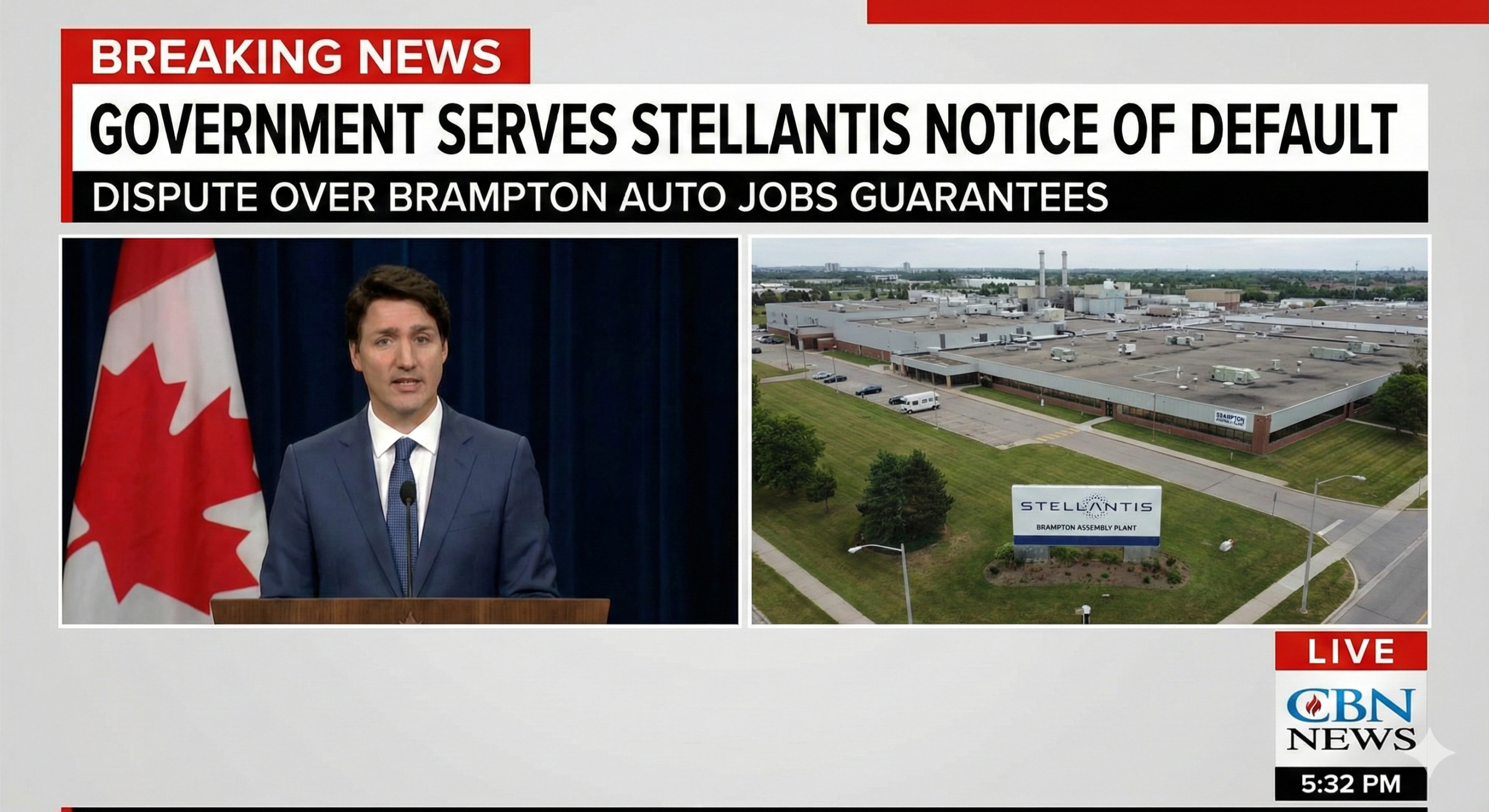
Federal Government Serves Stellantis Notice of Default Over Brampton Auto Jobs

The federal government has formally served automaker Stellantis with a “notice of default” under contracts tied to its operations at the Brampton Assembly Plant, following the company’s plans to move Jeep Compass production to a U.S. facility. The announcement, made by Industry Minister Melanie Joly, signals the government’s commitment to protecting thousands of Canadian auto jobs.

Protecting Auto Jobs at Brampton Assembly

Minister Joly Speaks in Parliament

On December 4, Industry Minister Melanie Joly addressed the House of Commons’ Standing Committee on International Trade, emphasizing the importance of defending domestic auto jobs.

“When it comes to protecting auto jobs, we will not let these industries down. We’ll stand firm for the sake of our workers, our industries and our nation because defending these jobs means defending Canada’s economic backbone and the livelihoods of countless families,” she said.

The notice of default follows a formal dispute-resolution process triggered by Joly on November 3, after the federal government raised concerns over Stellantis’ plan to shift production away from Brampton. At the time, Joly noted that Stellantis had made commitments to invest in the Brampton plant, and the government expected those promises to be honoured fully.

Stellantis Responds

A spokesperson for Stellantis Canada, LouAnn Gosselin, confirmed the company continues to engage with the government as part of the dispute-resolution process.

“We are working toward our shared objective of securing a long-term, sustainable future for automotive manufacturing in Canada, including in Brampton. The process is confidential and so we cannot comment further,” Gosselin said in an email on December 5.

Parliamentary Debate and Contract Questions

Conservative MPs Raise Concerns

During the committee meeting, Conservative MP Adam Chambers questioned Minister Joly about reports that officials had not fully read the Stellantis contracts before they were signed.

Joly clarified that she was not in her current position when the agreements were finalized years ago. She noted there were multiple contracts involved, and while the opposition claimed access, she emphasized that the government’s priority had been to protect jobs at the Brampton plant.

Chambers pressed further about whether the contracts guaranteed 100 per cent of Stellantis’ Canadian footprint. Joly responded that there was a jobs guarantee linked to new funding for plants in Windsor and Brampton, which was crucial for ensuring employment stability.

Historical Context

Joly contrasted the current government’s approach with previous administrations. She said the 2009 Conservative government had negotiated subsidies for GM and Chrysler without a full jobs guarantee, leading to closures of the Oshawa, Windsor, and Ford plants, as well as the Mississauga Orion Bus assembly plant.

“It was devastation, and we were the first government to bring back jobs in the auto sector because we were able to create around 3,000 jobs in Windsor, and we were able to create around 3,000 jobs in St. Thomas,” she said.

The Trigger: Jeep Compass Relocation

October Notice from Stellantis

Minister Joly revealed she became aware of the potential relocation of Jeep Compass production around October 15, after receiving a 24-hour heads-up from Stellantis’ global CEO.

“We thought that was completely unacceptable. We can’t open that floodgate of basically our automakers leaving the country,” Joly said, adding that she immediately sought to ensure Team Canada would work collectively to hold Stellantis accountable.

Stellantis had formally announced the decision to relocate Jeep Compass production to the U.S. on October 14, prompting immediate concern from Canadian auto workers and the federal government.

Union Reaction

The decision triggered a swift response from Unifor’s Stellantis Council, representing over 8,000 workers across Canada. The union held an emergency meeting, issuing a statement calling for the company to reverse its decision and urging a “strong and immediate response” from the government.

Earlier in 2024, the union had already expressed concerns over production delays at the Brampton plant. Unifor Local 1285 president Vito Beato noted that work on the Challenger and Charger gas vehicles stopped at the end of 2023, and retooling for electric vehicle production began in early 2024. However, the process was paused on February 20, initially planned as an eight-week pause, causing anxiety among plant workers.

Economic and Strategic Implications

Auto Sector Employment

The Brampton Assembly Plant is a critical hub for Stellantis Canada, with thousands of jobs at stake. Minister Joly stressed that protecting these positions is not just about a single company but about safeguarding Canada’s broader automotive sector, which employs approximately 125,000 people nationwide.

Federal Support and Industry Investments

The dispute also highlights the government’s approach to linking public support and funding to job creation. Joly emphasized that new funding for the Windsor and Brampton plants was strategically tied to employment guarantees, ensuring taxpayer investments directly supported Canadian jobs.

Risks of Offshoring

The relocation of production to the U.S. underscores a growing concern about offshoring of manufacturing and its impact on Canadian industrial capacity. Joly framed the federal government’s response as a necessary step to prevent further erosion of domestic auto manufacturing.

Next Steps in the Dispute

Notice of Default

Serving Stellantis with a notice of default is part of a formal dispute-resolution process outlined in the company’s agreements with the federal government. The notice signals the government’s position that the automaker may not be meeting its contractual obligations regarding job protection and investment in Canadian operations.

Confidential Negotiations

Both the government and Stellantis are engaged in confidential discussions aimed at resolving the dispute while protecting jobs and maintaining Canada’s automotive manufacturing base. No further public details have been disclosed regarding potential penalties or remedial actions.

Conclusion

The federal government’s action against Stellantis over the planned relocation of Jeep Compass production highlights the ongoing tension between corporate strategy and national industrial policy. By serving a notice of default, Canada is asserting the importance of job protection, investment commitments, and the long-term viability of domestic auto manufacturing.

For workers at the Brampton Assembly Plant and across Stellantis facilities in Canada, the government’s firm stance provides a critical line of support. As negotiations continue, all parties appear committed to finding a solution that safeguards jobs while ensuring a sustainable future for automotive manufacturing in the country.

The coming weeks will be pivotal for the auto sector, with the outcome likely to influence future government-industry relations, investment decisions, and employment security in one of Canada’s most vital manufacturing sectors.