

Brampton Considers Licensing Framework for Wildlife Removal Companies to Ensure Humane Practices
Brampton is taking a closer look at the regulation of wildlife removal services within the city, exploring new bylaw changes aimed at establishing consistent, ethical, and accountable standards for operators. The proposed reforms, which could introduce mandatory licensing for wildlife removal businesses, are designed to address growing concerns about unregulated practices and the welfare of local wildlife.
Current Wildlife Removal Landscape in Brampton
Brampton currently has 18 active wildlife removal businesses, operating under minimal regulation. This lack of oversight has prompted concerns from both residents and wildlife advocacy groups about the treatment of animals and the potential impact on public safety.
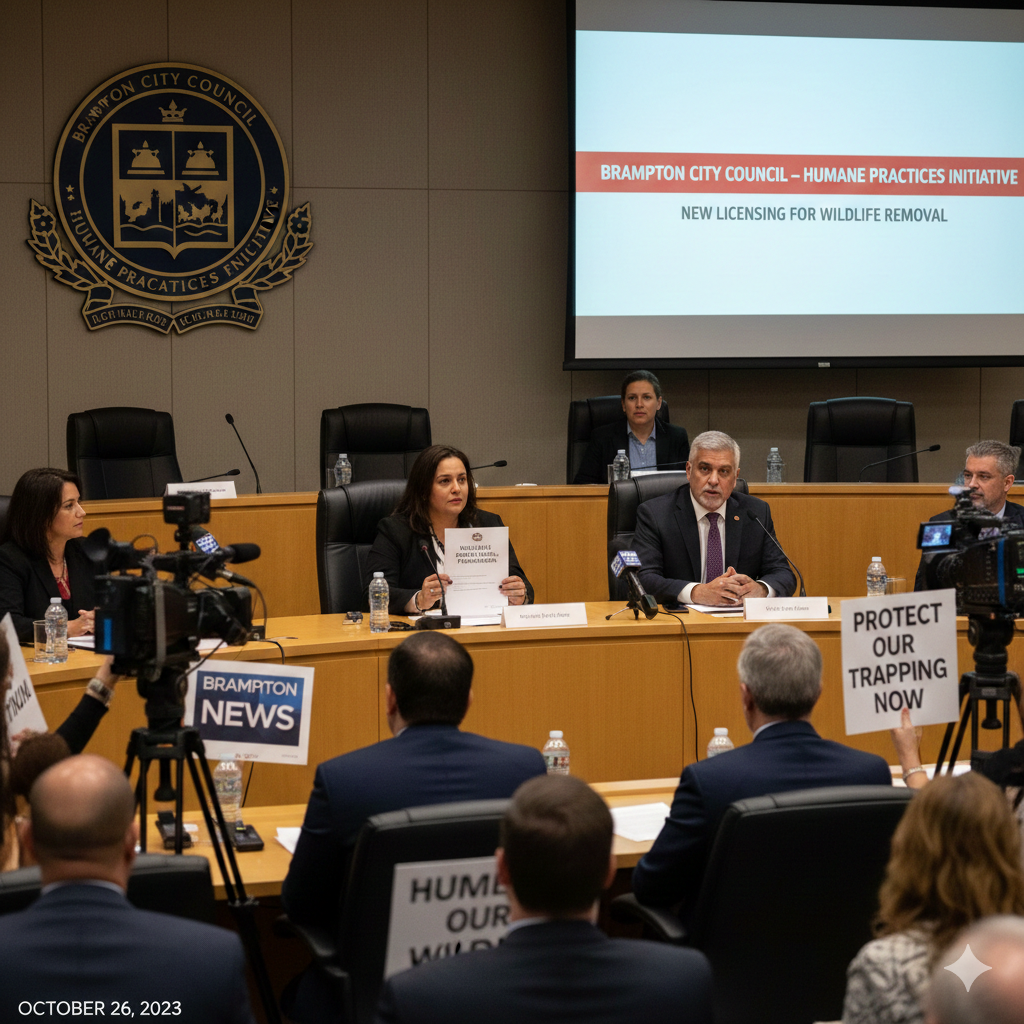
City staff presented a report to Brampton Council during the Committee of Council meeting on November 12, recommending the introduction of a municipal licensing framework for wildlife removal operators. The goal is to ensure that all companies follow standardized, humane procedures when handling wildlife in urban settings.
Why Licensing Is Being Proposed
The city’s staff report emphasized several key reasons for implementing a licensing program:
-
Setting Minimum Standards: Licensing would allow the city to define baseline requirements for training, humane animal exclusion, insurance, and record-keeping.
-
Preventing Inhumane Practices: Operators would be prohibited from using cruel or unlawful methods for capturing or relocating wildlife.
-
Increasing Accountability: By requiring detailed service plans and close-out reports for each wildlife removal case, residents would gain transparency regarding how wildlife is managed in their community.
“A licence allows the city to set minimum standards for training and humane exclusion, require insurance, record-keeping, and prohibit inhumane or unlawful methods,” the staff report explained. “A new licensing schedule is recommended to address complaints related to wildlife removal businesses that have highlighted inconsistent practices among service providers.”
The report further noted that the licensing framework would mandate humane exclusion as the default approach and ensure operators provide residents with written service plans and follow-up reports detailing the outcome of each intervention.
Support from Wildlife Experts and Advocates
Sandy Donald, Director of Ontario Wildlife Rescue, which collaborates with more than 50 wildlife rescue centres across the province, addressed the council in support of the proposed licensing measures.
Donald highlighted the unregulated nature of wildlife removal in Ontario, describing it as a “wild west” scenario. He explained that many companies operate without oversight, often capturing adult animals while leaving behind orphaned young, which frequently end up in rescue centres.
“Currently, most wildlife removal companies are unlicensed in Ontario. Anyone can set up a wildlife removal company. They go in, capture the mother, and a few days later the young are found because the young have been left behind,” Donald told council.
He added that between 20 to 40 per cent of orphaned wild animals—including skunks, raccoons, and rabbits—end up in wildlife rescue centres due to improper removal practices. In Brampton, these orphans are typically collected by Brampton Animal Services and transported to licensed wildlife rehabilitation facilities.
Donald commended Brampton Animal Services for being one of the best in the province regarding wildlife care, but he emphasized that a municipal licensing program would help reduce the strain on taxpayer-funded services while ensuring higher standards for wildlife removal.
Industry Perspectives Align With Advocacy Groups
Brad Gates, President of Gates Wildlife Control, which has served the Greater Toronto Area since 1984, also expressed strong support for the proposed bylaw changes. Gates echoed concerns raised by Donald, noting that while ethical standards have improved in recent years, insufficient regulatory oversight continues to allow questionable practices in the industry.
“Without licensing or enforcement, unethical practices continue. Many operators still define ‘humane’ according to convenience rather than animal welfare. Young are still being left behind in attics, exposed outdoors without heat, or separated from their mothers. Even more alarming is a growing pattern of fraudulent conduct within the industry,” Gates wrote in a letter to council.
Gates also pointed out the inconsistency in Brampton’s regulatory landscape. While licensing is required for various businesses such as taxi services, contractors, and pet groomers—entities that also interact closely with the public—wildlife removal companies, which handle living animals and often enter private property, remain largely unregulated.
Potential Licensing Structure and Costs
If approved, the licensing framework would require all wildlife removal operators in Brampton to obtain a municipal licence with an annual fee of $239. This fee is intended to support the administration of licensing, including compliance monitoring and enforcement.
The proposed licensing program would:
-
Mandate humane exclusion techniques as the first approach for wildlife management.
-
Restrict the use of inhumane or illegal methods of capture or removal.
-
Require operators to provide residents with written service plans prior to removal.
-
Ensure operators submit close-out reports to confirm that the wildlife removal was completed according to humane standards.
City staff believe these measures will significantly reduce incidents of improperly handled wildlife and improve outcomes for orphaned animals, ultimately benefiting both residents and local wildlife populations.
Community Implications
The introduction of a licensing program carries several potential benefits for Brampton residents:
-
Enhanced Animal Welfare: Licensed operators would follow strict guidelines to ensure animals are treated ethically and humanely.
-
Increased Transparency: Residents would receive written documentation detailing the wildlife removal process, enhancing trust in the service.
-
Reduced Burden on Public Services: By enforcing stricter standards, fewer orphaned or improperly handled animals would require intervention from Brampton Animal Services.
-
Accountability and Safety: Licensing provides a mechanism for monitoring and penalizing unethical operators, protecting both animals and the community.
Council Response and Next Steps
During the November council meeting, members voted to refer the staff report and proposed bylaw changes back for additional consultation and review. This step allows city staff to refine the licensing framework, address any remaining concerns, and gather further input from stakeholders before the council considers the measures for approval.
The referral ensures a careful, thorough approach to regulation, balancing the interests of wildlife, residents, and business operators.
Expert Consensus on the Need for Regulation
Wildlife experts and industry professionals alike argue that without a licensing system, Brampton risks continued inconsistency and unethical practices in wildlife removal. A regulated framework would establish uniform standards across the city, ensuring that operators are trained, accountable, and compliant with humane treatment protocols.
Both Donald and Gates emphasized that licensing is not intended to penalize operators but to professionalize the industry, protect wildlife, and reduce unnecessary strain on municipal services.
Conclusion
Brampton’s potential move to license wildlife removal businesses represents a significant step toward more responsible and ethical wildlife management. By requiring operators to adhere to standardized, humane practices, the city aims to safeguard animal welfare, increase accountability, and provide residents with reliable, transparent services.
As council continues its review and consultation process, the proposed bylaw changes may soon transform how wildlife removal is conducted in Brampton, aligning industry standards with broader ethical and public service expectations.
The outcome of these discussions could set a precedent for other municipalities in Ontario seeking to regulate wildlife removal and protect both animals and residents in urban environments.