
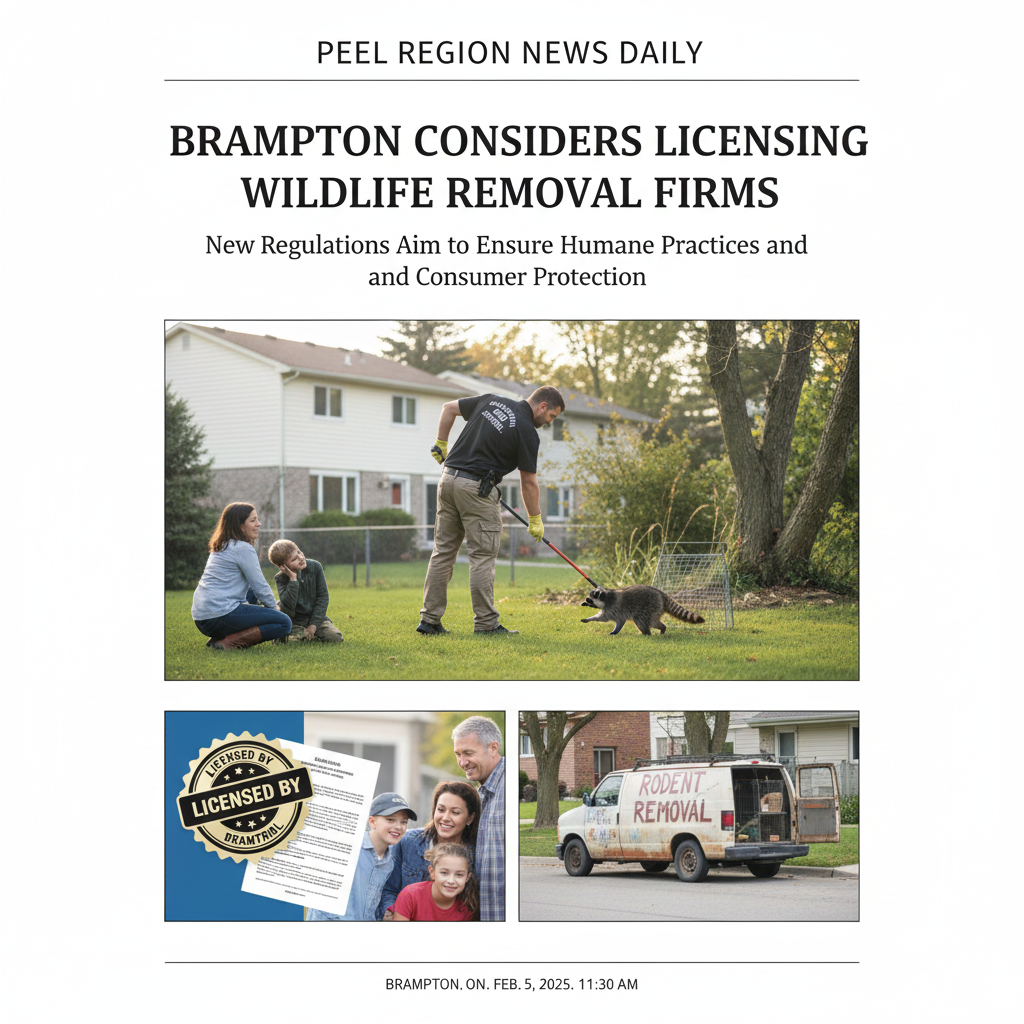

Brampton Considers Licensing Wildlife Removal Firms to Ensure Humane Practices
City Moves Toward Regulating a “Wild West” Industry
Brampton council is exploring changes to the city’s bylaws that would require wildlife removal operators to obtain municipal licenses, a move aimed at establishing consistent, humane, and accountable standards across the industry. The proposed changes were introduced through a city staff report presented at the November 12 Committee of Council meeting.
City staff recommended that council approve a licensing framework that would allow the city to set minimum standards for training, require insurance, enforce record-keeping, and prohibit inhumane or unlawful methods. The report highlighted complaints regarding inconsistent practices among wildlife removal service providers, which the proposed licensing schedule aims to address.
“A new licensing schedule would mandate humane exclusion as the default, restrict inhumane methods, and require operators to provide residents with written service plans and close-out reports,” the staff report noted.
Current Landscape of Wildlife Removal in Brampton
According to city staff, there are currently 18 active wildlife removal businesses operating in Brampton. If the bylaw changes are approved, these operators would be required to obtain a city-issued license at an annual fee of $239.
The licensing initiative is intended to reduce incidents of improper wildlife handling that have led to orphaned animals and increased pressure on municipal services.
Community and Industry Support
Wildlife Experts Advocate for Regulation
Sandy Donald, director of Ontario Wildlife Rescue, which collaborates with over 50 wildlife rescue centers across the province, addressed council in support of the proposed licensing changes.
“Currently, most wildlife removal companies are unlicensed in Ontario. Anyone can set up a wildlife removal company. It’s a wild west that’s completely unregulated,” Donald told council. He explained that improper removal often leaves young animals behind after the mother is captured, leading to a significant number of orphaned animals.
“Anywhere from 20 to 40 per cent of orphaned wild animals — skunks, raccoons, rabbits — end up in wildlife rescue centres because of this problem,” Donald added. He noted that in Brampton, these orphaned animals are typically picked up by Animal Services before being transferred to wildlife rescue centers.
Donald praised Brampton Animal Services as “one of the best in Ontario when it comes to wildlife,” but stressed that municipal licensing would help ease the burden on taxpayer-funded services by imposing stricter standards on wildlife removal operators.
Industry Voices Call for Oversight
Brad Gates, president of Gates Wildlife Control, a Greater Toronto Area company operating since 1984, also voiced support for the licensing initiative. In a letter to council, Gates acknowledged improvements in ethical standards in recent years but emphasized that a lack of regulatory oversight continues to create problems in the industry.
“Without licensing or enforcement, unethical practices continue. Many operators still define ‘humane’ according to convenience rather than animal welfare. Young are still being left behind in attics, exposed outdoors without heat, or separated from their mothers,” Gates wrote. He also cited concerns about a growing pattern of fraudulent conduct among some wildlife removal companies.
Gates highlighted the inconsistency in municipal licensing requirements, noting that Brampton already mandates licenses for taxis, contractors, and pet groomers, yet wildlife removal businesses — which handle live animals and enter private property — remain largely unregulated.
Next Steps for Council
Council has decided to refer the staff report and proposed bylaw changes back to city staff for additional consultation and review. The proposal will return to council for further consideration at a later date, allowing for public input and continued engagement with stakeholders in the wildlife removal industry.
If approved, the licensing framework would establish clear expectations for wildlife removal operators, strengthen enforcement against unethical practices, and ensure that humane treatment becomes the standard for handling wild animals in Brampton.