
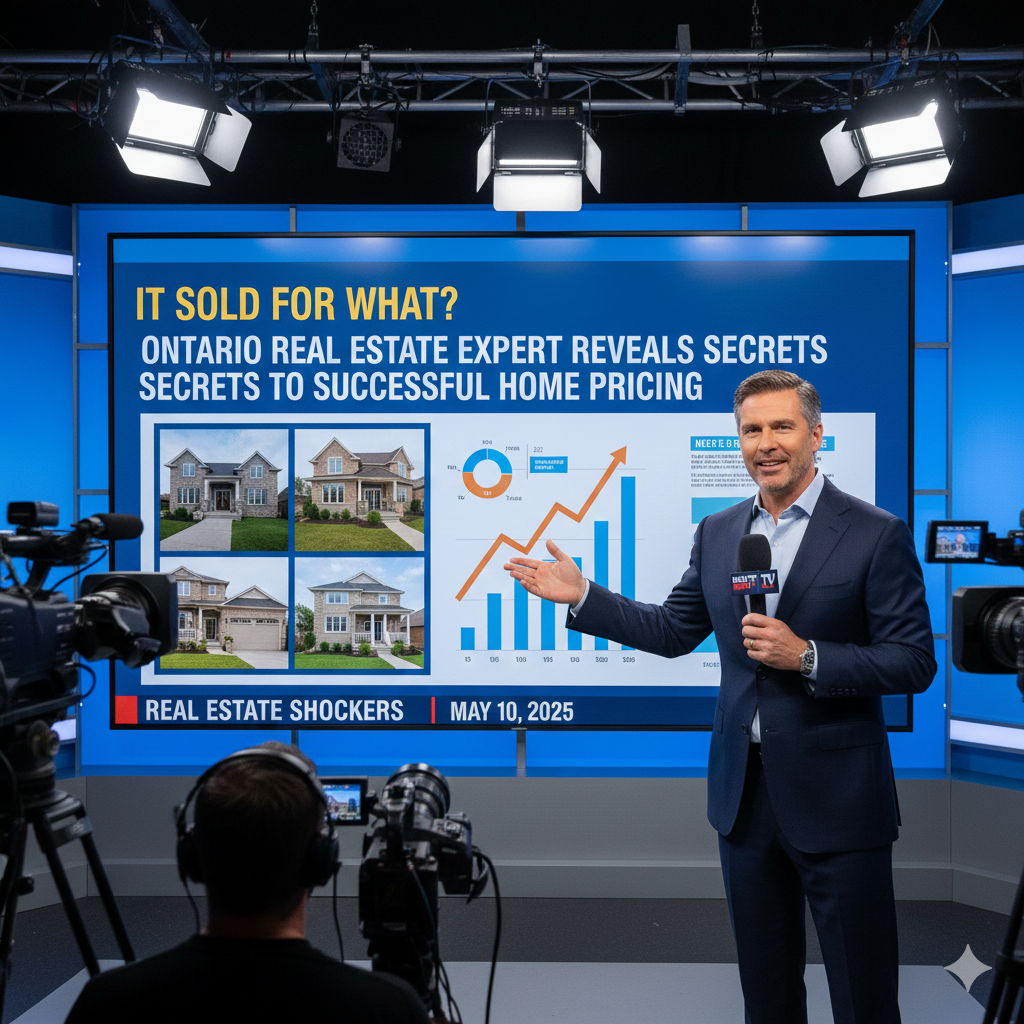

It Sold for WHAT?!” Ontario Real Estate Expert Explains the Secrets to Successful Home Pricing
Real estate agent Lindsay Smith, with nearly 40 years of experience in the Ontario market, explains why overpricing a home is the silent killer in today’s real estate environment—and how strategic pricing can make all the difference.
The Three Realities of Every Real Estate Market
Every month, three scenarios play out in housing markets:
-
Homes come on the market.
-
Homes sell successfully.
-
Homes quietly expire because the asking price is disconnected from reality.
While some listings fail due to personal circumstances, most unsold homes suffer from one root cause: an unrealistic asking price.
Half the street nods approvingly when a home sells; the other half erupts in disbelief: “It sold for WHAT?!”
Over decades, Smith has observed one universal truth: underpricing rarely hurts, but overpricing can doom a listing.
Why Overpricing Is the “Silent Assassin”
Homes listed significantly above market value fail to attract buyers. They sit idle, age, and become “stale,” prompting potential buyers to ask, “What’s wrong with this house?” The market quickly punishes overconfidence.
In contrast, underpriced homes attract crowds, spark competition, and often sell for—or above—their true market value within hours.
How Smart Pricing Works
Accurate pricing is straightforward, though it requires discipline:
-
Analyze recent sales of similar homes—not wishful thinking, but real, completed transactions.
-
Evaluate current competition, because buyers compare listings constantly.
-
Adjust for market shifts since those sales closed, ensuring the price reflects today’s reality.
Using outdated data or guessing high is a fast track to expired listings and wasted time.
Durham Region Case Study
Recent numbers in Durham Region highlight the current market dynamics:
-
715 homes sold last month.
-
Average time on market: 47 days; final successful listing period: 29 days.
-
Homes sold for about 98% of the asking price, showing buyers still negotiate but the market is not overheated.
Agents often price with a strategic cushion—for instance, if a home’s market value is $850,000, it might be listed at $890,000 to allow for a natural reduction to the final sale price. But this only works if the baseline value is accurate and realistic.
Example: Townhome Pricing
Consider a Durham Region townhome:
-
1,060 sq. ft., freehold, two bedrooms, 1.5 baths, single garage, good but not renovated.
-
Nearby three-bed/three-bath homes sold for $670,000–$679,000.
-
Another upgraded three-bed/three-bath sold for $662,000.
The subject townhome lacks the third bedroom, third bathroom, and renovations. Its realistic market value: $620,000–$630,000.
Human Nature and Market Realities
Many failed listings stem from psychology:
-
Agents quote high to win a listing.
-
Sellers “try higher” based on anecdotal advice.
In last month alone, 180+ Durham listings expired unsold, mostly due to overinflated asking prices rather than bad luck.
Today’s market is balanced, not the hypercompetitive seller’s market of 2021. Using old pricing strategies now can backfire quickly.
Bottom Line:
To sell successfully, price with realism, consider market conditions, and resist the temptation to chase a number that doesn’t match your home’s true value. Overpricing is the quiet killer; smart, strategic pricing is the key to attracting buyers and closing the sale.